

By FranLift
AI & Automation | Post 37 Of 100 | November 12, 2026 | 7:00 AM
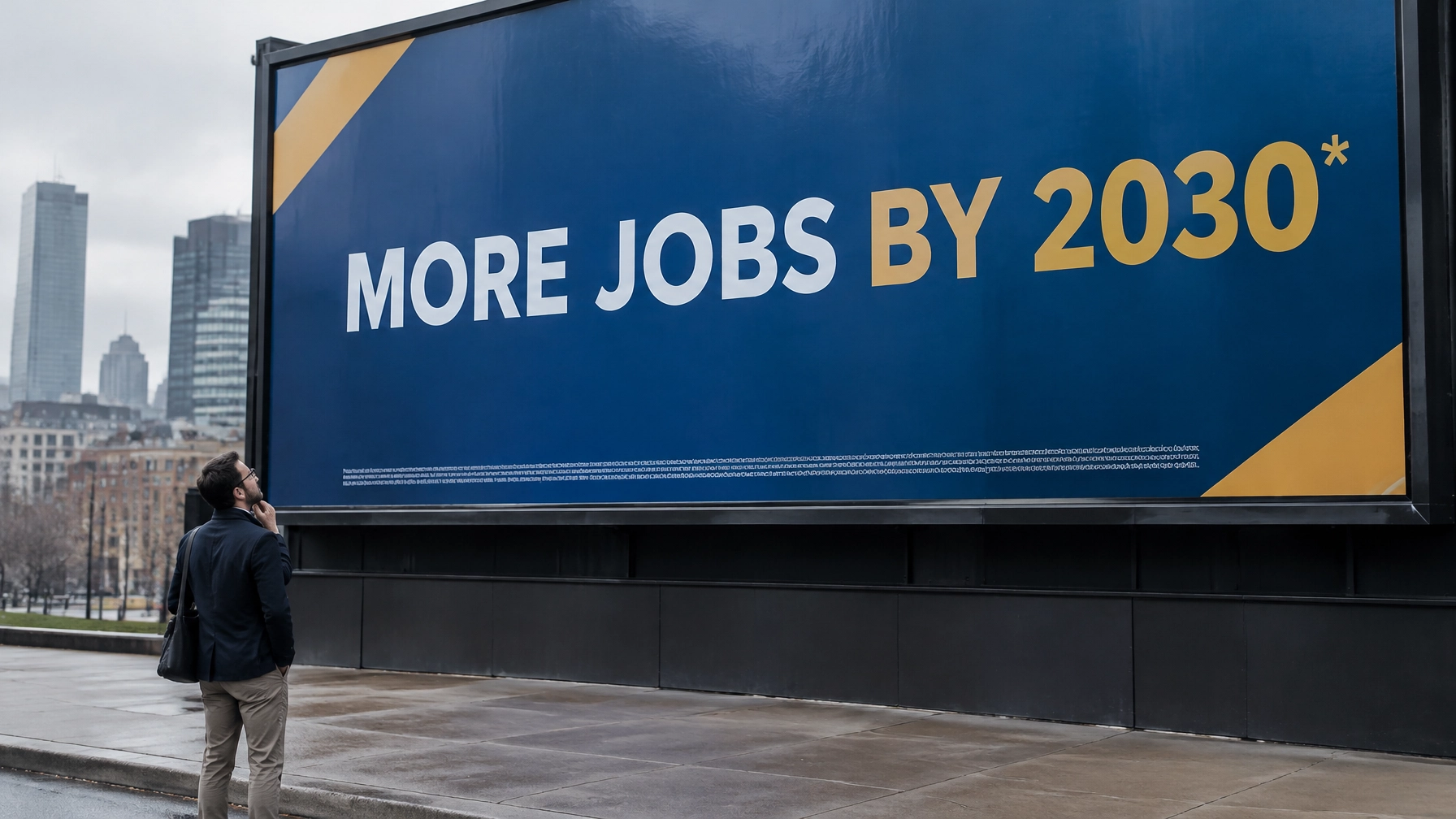
Gartner’s November 10 forecast has the kind of headline workers have been waiting for: by 2030, AI will create 10.6 million jobs and eliminate 8.9 million, for a net increase of 1.7 million. That is genuine good news in aggregate.
Then comes the footnote. Gartner analyst John Lovelock expects executives to defer the creation of about 5 million additional positions by 2030. These jobs are not eliminated. They are never established, so they do not appear in layoff counts, WARN notices or headlines.
You cannot be laid off from a job that was never posted. That is the quiet career cost: the opening that never appears.
Gartner also projects that more than 20% of the global workforce, about 435.5 million people, will need to adapt their tasks and professional boundaries as AI changes their work. Direct AI-driven displacement is projected at 0.4% to 1.8% of global workers. The roles most exposed include repetitive, standardized work such as basic data entry, simple document review and routine customer service. Some of the new roles involve large-model training, AI security, prompt engineering, data-center infrastructure and AI implementation. A displaced clerk or customer-service representative may not be able to move directly into those specialties.
Related Reading: Yesterday’s article showed that the people doing the hiring may not even check for the certificate you were told to earn. This one shows that the openings themselves may never be posted.
The Hard Truth
The layoff headlines may look calmer. Through October 2026, employers announced 617,189 job cuts, down 44% from the same period in 2025, according to Challenger, Gray & Christmas data covered by CNBC Make It. Yet roughly one-third of U.S. workers still worry about losing their jobs.
Both facts can be true. Announced cuts are visible. Deferred openings are not. The headline number is calmer while the structural squeeze stays quiet.
The net-positive forecast cannot tell an individual worker whether their specific role will survive, whether their employer will invest in retraining, or whether a new position will be created in their city. A net increase of 1.7 million jobs does not guarantee a place for every person whose work is changing. And the expected 5 million deferred positions mean fewer doors to walk through even in Gartner’s optimistic scenario.
That does not mean the forecast is a prediction of mass unemployment. Forecasts are not measurements, and projections to 2030 carry wide error bands. Gartner’s estimate of direct displacement, 0.4% to 1.8% of global workers, is modest compared with the scale of the workforce. Economies have historically absorbed job shifts, and some workers whose roles change do transition, particularly when they can access useful training. People who build genuinely in-demand skills can still land new roles.
Gartner Distinguished VP Analyst Helen Poitevin says advanced organizations treat AI as a catalyst for rebalancing human and technical capabilities, not simply reducing headcount. Gartner also cautions organizations against using AI solely to cut jobs. Those are important counterweights to the doom narrative.
But the balanced reading is not “relax, the forecast is positive.” It is “the aggregate may grow while your particular path narrows.” If you are in IT, coding, manufacturing, trucking or office work, waiting for the general forecast to rescue your role is a strategy built on a statistic, not a plan.
The Pivot: Why Franchising Beats Corporate Employment
Franchising is not an automatic escape from risk, and business ownership is not a guaranteed replacement for a paycheck. It is a different way to approach work: rather than waiting for an employer to create a position, you investigate whether owning and operating a business fits your goals, finances and tolerance for uncertainty.
Mid-career experience can transfer. Process improvement, logistics, customer service, safety, project management and training all matter in businesses that need reliable operations and capable people. You do not have to become an AI specialist to consider an ownership path. You do have to understand the daily work, the investment and the risks.
A franchise may provide a recognized brand, operating systems and training. It also comes with fees, obligations and limitations set out in legal documents. The best franchises to own are not the ones with the loudest pitch; they are the ones that match your capital, location, schedule, skills and appetite for hands-on management.

How To Investigate With Evidence (Before Any Pitch)
Start by putting your constraints on paper. Set an investment range that accounts for working capital, not only the initial fee. Decide how involved you want to be in day-to-day operations, what schedule you can manage and how much risk you can afford. These are filters for evaluating franchise opportunities, not details to leave until after a brand has captured your attention.
Then request and review the Franchise Disclosure Document (FDD). Under the FTC Franchise Rule, the franchisor generally must provide it at least 14 calendar days before you sign a binding agreement or pay the franchisor or an affiliate. Read all 23 items and the attached agreements. Review startup and ongoing costs, litigation and bankruptcy disclosures, territory, required suppliers, training and support, and renewal, termination and transfer terms.
If the FDD includes a financial performance representation, inspect exactly what it covers. Revenue is not profit. Another owner’s results are not a promise of yours. Contact current and former franchisees listed in the FDD; ask what they invested, how long it took to open, what staffing and customer demand are like, and whether the franchisor’s support matched their expectations.
Use the FTC’s Consumer Guide to Buying a Franchise and Franchise Rule Compliance Guide as resources. If SBA financing may be relevant, check the SBA Franchise Directory. A directory listing relates to eligibility for certain SBA financing; it is not an endorsement, loan approval or promise of success. Before any purchase, get independent advice from a qualified franchise attorney and financial professional.
A franchise consultant can help organize a search and compare a franchise for sale against your priorities. FranLift’s matching service is free to the client because franchise companies cover its costs from their marketing budgets. Matching can help identify options to investigate; it does not replace independent due diligence. Learn how FranLift works.
Start A Conversation With FranLift
You do not need to decide today that ownership is right for you. You can start by comparing it with the alternatives, using your actual financial picture and lifestyle needs rather than fear of the next headline. If you are researching how to buy a franchise, begin with questions, documentation and independent advice.
FranLift can help you clarify your goals, explore a curated shortlist and make introductions to franchise brands. The choice and the diligence remain yours. Start a conversation with FranLift.


THERE IS NO GUARANTEED INCOME. Past results, where disclosed, do not guarantee future performance.
This article is for informational purposes only and is not legal, financial, investment, or career advice. Consult qualified professionals before making a business purchase.
© 2026 FranLift. Launch Beyond Boundaries.
