


Launch Beyond Boundaries: Turn Disruption Into Ownership.
AI is changing the employment contract faster than many workers expected.
Software tools can now generate code, troubleshoot systems, and complete routine development tasks. Automated equipment can perform work once handled by entire production teams. Autonomous trucking technology continues to advance, placing long-term pressure on driving careers.
The immediate question is no longer whether automation will affect work. It is how prepared you are to choose your next move.
For some professionals, that move may be a new corporate role. For others, it may be a business they control. Franchise opportunities can provide a structured path into ownership without requiring you to invent an operating model from the ground up.
The right franchise consultant can help you evaluate that path objectively.
The Hard Truth: Automation Is Rewriting Career Paths
The most accurate way to understand AI displacement is not to assume every occupation will disappear overnight. The more immediate threat is that companies will need fewer people for routine tasks while raising expectations for the workers who remain.
That shift is already visible in technology.
Research using U.S. employment data has reported a sharp decline in routine programming roles, while overall software developer employment has remained comparatively stable. The distinction matters. AI may not eliminate every developer, but it can reduce entry-level opportunities and increase demand for people who can manage architecture, integrations, security, and business decisions.
A Federal Reserve staff paper on coder employment examines these changes in detail. The evidence points toward a labor market where coding work is increasingly divided between tasks that AI can automate and responsibilities that require judgment, accountability, and communication.
The World Economic Forum’s analysis of AI and software developers describes a similar transition: roles are being redefined rather than simply erased. That still creates serious pressure for workers whose experience is concentrated in tasks a machine can now complete faster and more cheaply.
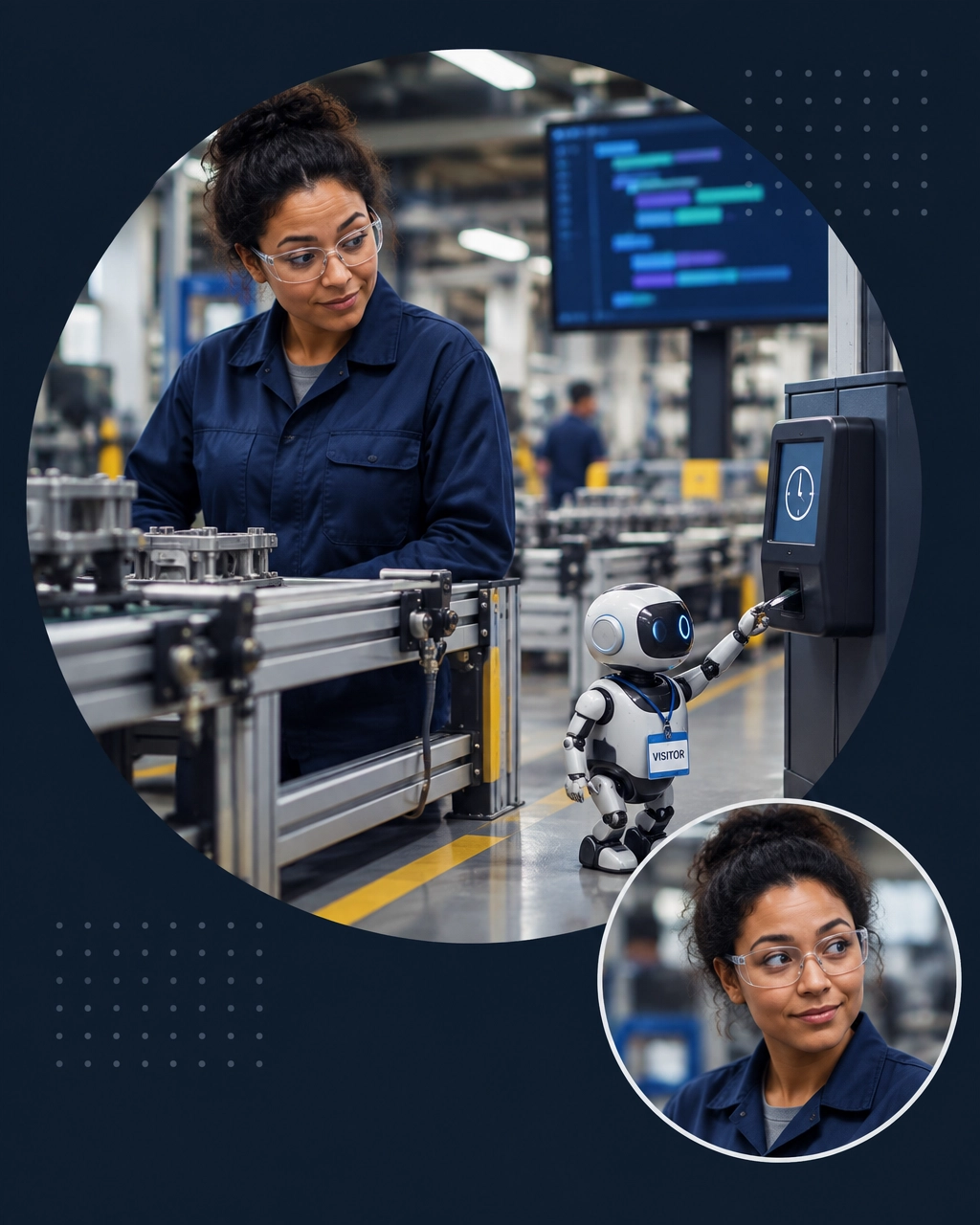
Manufacturing faces a related challenge. Robotics, machine vision, predictive maintenance, and AI-based quality control can reduce the need for repetitive labor. A plant may still need experienced people, but the work may shift from manual production to process management, equipment oversight, vendor coordination, and customer service.
The same caution applies to trucking. There is not yet a reliable official statistic showing that AI has already eliminated a specific share of U.S. truck-driving jobs. Freight cycles, labor shortages, operating costs, and traditional logistics technology remain major factors. However, autonomous vehicle development and AI-assisted routing create a clear long-term risk for a profession built around driving hours.
The Bureau of Labor Statistics occupation pages for software developers and heavy and tractor-trailer truck drivers are useful for understanding the underlying occupations, but they do not publish a simple “jobs replaced by AI” total.
That distinction is important. A responsible franchise consultant should not use exaggerated statistics to sell a dream. The real issue is exposure: which parts of your current work are becoming easier to automate, and which skills can you transfer into ownership?
The Pivot: Why Franchising Can Beat Waiting For Another Employer
Corporate employment gives you a paycheck, but it does not give you control over the company’s technology decisions, restructuring plans, or hiring priorities.
Business ownership changes the equation. You are still responsible for risk, customers, employees, expenses, and execution. But your future is no longer determined entirely by whether a company decides your job description can be reduced to a prompt, a machine process, or a software subscription.
A franchise can offer a middle ground between employment and building an independent company from zero.
You receive access to a recognized business model, operating procedures, training, marketing guidance, and a franchisor’s experience. You still have to perform due diligence and operate effectively, but you are not required to develop every system alone.
This is why franchise ownership can appeal to displaced professionals in very different industries:
- A software professional may bring project management, systems thinking, and problem-solving skills to a service, education, technology, or business-to-business franchise.
- A manufacturing supervisor may have experience with staffing, process improvement, inventory, safety, and quality control that transfers well to operations-heavy businesses.
- A truck driver may understand logistics, scheduling, customer expectations, asset management, and route efficiency: skills relevant to transportation, home services, automotive, and other local businesses.
You do not need prior experience in the exact franchise industry. FranLift explains that many franchisees enter industries where they have no direct background. The more important questions are whether the model fits your finances, preferred work style, management ability, location, and long-term goals.
That fit matters because the “best franchises to own” are not identical for every buyer. A high-growth concept may be wrong for someone seeking predictable hours. A low-inventory service business may be more suitable for one person, while a customer-facing retail or food concept may suit another.
The goal is not to find the most popular franchise. It is to find the most appropriate business.
Choosing The Right Franchise Consultant
A franchise consultant should function as a decision partner, not a salesperson pushing the first available franchise for sale.
Start with the consultant’s discovery process. A credible advisor should ask about your available capital, desired income, timeline, location, family responsibilities, tolerance for operational complexity, and willingness to manage employees. If the conversation focuses only on how quickly you can sign, you are not receiving meaningful matchmaking.
Next, ask how opportunities are selected. A consultant should be able to explain why a particular brand fits your profile and why other brands were excluded. FranLift’s franchise matchmaking process focuses on narrowing a large marketplace into a practical shortlist based on buyer values, goals, and resources.
You should also understand the consultant’s compensation structure. FranLift states that its service is free to prospective franchisees because participating franchise companies cover the cost through their franchise development budgets. Ask the consultant to explain how that arrangement works and how conflicts are handled.
Then evaluate the support beyond the introduction. Finding a brand is only one stage of how to buy a franchise. You should expect guidance on:
- Reviewing the Franchise Disclosure Document, or FDD
- Understanding startup costs and working-capital needs
- Comparing owner-operator and manager-run models
- Evaluating territory and local demand
- Connecting with franchise attorneys and funding partners
- Speaking with current and former franchisees
- Building a realistic launch and operating budget
A consultant cannot guarantee profitability, replace legal counsel, or eliminate business risk. The franchisor’s FDD, financial disclosures, agreements, and franchisee references require independent review. A qualified franchise attorney and financial professional should be part of the process before you sign or invest.

What To Bring To Your First Consultation
You do not need a perfect business plan before speaking with a franchise consultant. You do need an honest starting point.
Prepare a rough estimate of your liquid capital, investable assets, debt obligations, and preferred funding range. Include the amount of income you need during the first year and how long you could operate before reaching stability.
Clarify your role preference. Do you want to work in the business every day, manage a team, or build an operation that can eventually run with a manager? These choices significantly affect the franchise categories you should consider.
Also identify your transferable strengths. Do not limit your answer to your job title. A coder may be an excellent process designer. A plant supervisor may be a disciplined recruiter and trainer. A driver may understand customer service, scheduling, and logistics better than most new owners.
Finally, define your non-negotiables. Location, schedule, family time, travel, physical demands, and employee count all matter. The right franchise opportunity must fit your life as well as your balance sheet.
Start Your Franchise Search Before You Need A New Job
Waiting until a layoff, plant closure, or route reduction forces the decision can create unnecessary pressure. You will have fewer financial options and less time to investigate brands properly.
Starting earlier gives you room to compare franchise opportunities, build a funding strategy, review the FDD, and determine whether ownership is genuinely appropriate.
FranLift can help you begin with a structured conversation. The company researches franchise brands, creates a curated shortlist, facilitates introductions, and connects prospective owners with attorneys and funding partners.
If AI is changing your employment outlook, do not respond by chasing every franchise for sale you see online. Begin with fit, financial readiness, and a clear understanding of the operating model.
Contact FranLift to discuss your franchise options. The consultation is a practical first step toward determining whether business ownership, and which type of ownership, belongs in your next chapter.
© 2026 FranLift. Launch Beyond Boundaries.
