

Launch Beyond Boundaries.
AI is not waiting for the next recession to reshape your career. It is already rewriting job descriptions, shrinking entry-level teams, and converting once-specialized tasks into software features, robotic processes, and autonomous systems.
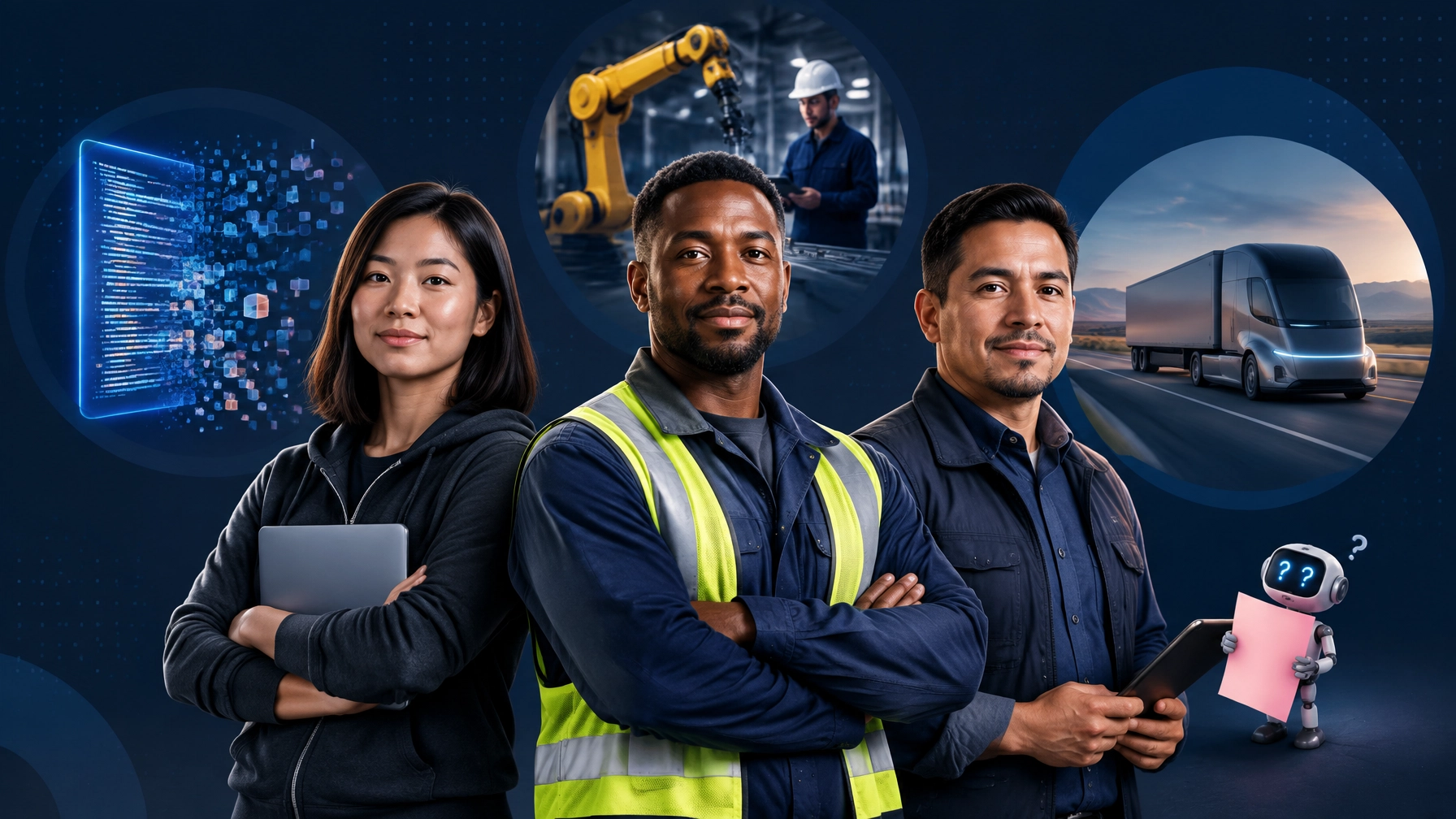
For IT and coding professionals, the pressure is appearing in routine development, testing, documentation, and support work. In manufacturing, robotics and predictive systems are changing the staffing requirements on the factory floor. In trucking, autonomous vehicles, algorithmic routing, and fleet analytics are reducing the number of human decisions required per mile.
The question is not whether work will change. It is whether your financial future will remain dependent on an employer’s response.
Franchise ownership is not a guaranteed escape from risk. It is a structured way to move from selling labor to operating an asset with customers, systems, employees, and potential resale value. For workers facing automation, that shift deserves serious consideration.
The Hard Truth: Your Job Can Survive While Your Leverage Disappears
The most misleading question in the AI debate is, “Will artificial intelligence replace my entire job?”
Most occupations will not vanish overnight. The more immediate threat is more precise: AI replaces enough of your tasks that your employer needs fewer people, reduces entry-level hiring, changes compensation, or expects one employee to produce the output of several.
That is how career disruption usually arrives. Not as a dramatic termination email, but as a slow reduction in leverage.
The World Economic Forum’s Future of Jobs Report 2025 projects that 92 million jobs could be displaced globally by 2030 while 170 million new roles are created. The report covers more than AI alone, including demographic shifts, economic changes, and the green transition. Still, AI and automation are among the central forces reshaping employment. The report also found that 41% of employers expect to reduce their workforce where AI makes existing skills obsolete.
That does not mean 41% of all workers will lose their jobs. It does mean employers are actively planning for a workforce in which some current capabilities are no longer scarce.
McKinsey estimates that activities representing up to 30% of hours currently worked in the U.S. economy could be automated by 2030, accelerated by generative AI. Goldman Sachs has estimated that approximately 300 million full-time job equivalents worldwide are exposed to generative AI automation.
“Exposed” is not the same as “eliminated.” That distinction matters. It also should not be used as an excuse to ignore the risk.
IT And Coding: The Entry-Level Ladder Is Under Pressure
Software development is not disappearing. In fact, the U.S. Bureau of Labor Statistics projects software developer employment to grow 15.8% from 2024 to 2034.
But traditional programming work is under more pressure. BLS projects computer programmer employment to decline 7% from 2025 to 2035.
That split tells the story. Employers still need people who can design systems, solve complex business problems, secure infrastructure, manage architecture, and connect technology to revenue. They need fewer people whose work consists primarily of repetitive code generation, debugging, documentation, or standardized maintenance.
AI can now produce a usable first draft of many technical outputs in seconds. That changes the value of experience. A worker who is paid primarily for completing repeatable tasks may become vulnerable even while the broader technology industry continues to grow.

For IT workers, the danger is not necessarily that the entire profession is decommissioned. It is that the career ladder becomes shorter. Fewer junior roles may exist to help workers develop the experience needed for senior positions.
Owning a business can provide another path to use technology skills. A former developer may be well suited to a business-to-business service franchise, managed technology operation, cybersecurity provider, digital marketing business, education company, or logistics-related service. The opportunity is not to abandon technology literacy. It is to apply it where you control the operating model and customer relationship.
Manufacturing: The Robot Is Already On The Floor
Manufacturing automation is not a future prediction. It is an operating decision being made today.
According to the International Federation of Robotics, the United States had approximately 295 industrial robots per 10,000 manufacturing employees in 2023, placing the country among the world’s most automated manufacturing economies.
BLS reports that advancements in automation will continue to reduce demand for production occupations. At the same time, the agency projects nearly one million annual openings in production occupations from 2024 to 2034, primarily because of retirements and worker turnover rather than explosive net growth.
That creates a confusing but important reality: manufacturing may continue hiring while many specific production roles become less secure.
A factory can need people and still need fewer people to perform a particular task. An automated facility may replace repetitive assembly positions while increasing demand for maintenance technicians, process specialists, supervisors, quality leaders, and employees who can manage complex systems.
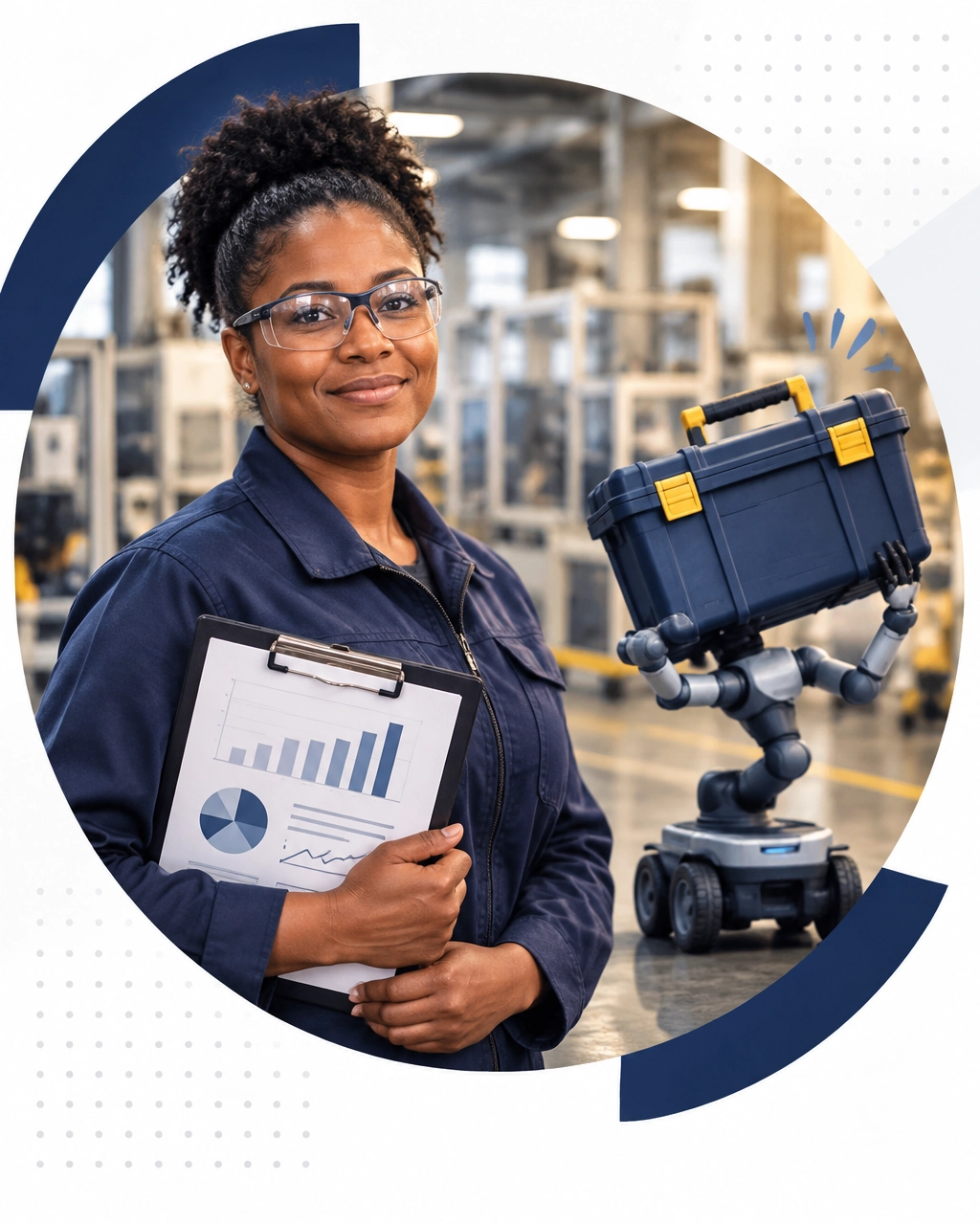
Workers who understand scheduling, safety, quality control, inventory, throughput, and team leadership already possess many of the skills required to operate a franchise. Those abilities are not limited to factories. They translate into home services, commercial maintenance, restoration, logistics, automotive, and other operationally complex businesses.
The pivot is not from “skilled work” to “unskilled entrepreneurship.” It is from applying operational skill inside someone else’s system to applying it inside a business you own.
Trucking: The Highway Is Becoming A Software Platform
Truck driving remains a major occupation. The BLS projects heavy and tractor-trailer truck driver employment to grow 4% from 2025 to 2035, with approximately 214,500 openings per year.
That is not evidence of an immediate nationwide collapse. It is evidence that disruption must be understood accurately.
BLS does not assume widespread fully autonomous trucking will eliminate the occupation during its current projection period. Instead, the agency expects technology to modify tasks and improve productivity. That baseline could change if regulation, safety validation, infrastructure, and adoption move faster than expected.
The shift is already visible. In May 2025, Aurora announced commercial driverless trucking in Texas, beginning regular Class 8 freight service between Dallas and Houston without a safety driver in the cab.
That does not mean every long-haul driver is about to lose work. It does mean the technology has moved beyond laboratory demonstrations and supervised pilots. A major transportation function that once required a human in the vehicle can now be performed commercially on selected routes.

For drivers, the risk may appear first through fewer miles, altered pay structures, centralized fleet management, or a shift toward roles involving remote monitoring, dispatch, maintenance, and logistics coordination.
The most exposed worker is not always the person driving the truck. It may be the person whose entire income depends on one company, one route, one contract, or one type of vehicle remaining economically necessary.
The Pivot: Build An Asset Instead Of Waiting For A Workforce Plan
Corporate employment offers income, benefits, and structure. It can also leave you dependent on decisions made in a boardroom hundreds or thousands of miles away.
Franchise ownership changes the position you occupy. Instead of waiting for an employer to determine whether your role remains valuable, you operate a business that serves customers directly.
That does not remove risk. Owners still face staffing challenges, changing demand, capital requirements, competition, and execution pressure. But ownership gives you control over more variables:
- The market you enter
- The business model you select
- The customers you serve
- The people you hire and develop
- The systems you improve
- The growth strategy you pursue
A job pays you for your contribution. A business may create value beyond your personal hours if it develops repeat customers, documented processes, trained employees, and consistent financial performance.
That potential matters in an economy where employers can purchase productivity through software instead of adding headcount.
A franchise also gives you structure that an independent startup does not always provide. Depending on the brand, support may include training, operating procedures, marketing systems, technology, vendor relationships, and performance guidance.
The system does not guarantee success. It can reduce unnecessary guesswork.
Your Existing Skills Can Transfer Into Franchise Ownership
You do not need to become a chef to own a food franchise. You do not need to perform every repair to own an automotive business. You do not need to personally complete every home-service job to build a service company.
The owner’s role often involves leading teams, maintaining standards, understanding financial performance, managing customer relationships, and following a proven operating model.
An IT professional may bring:
- Process design
- Project management
- Systems thinking
- Cybersecurity awareness
- Data analysis
- Technical sales experience
A manufacturing professional may bring:
- Scheduling discipline
- Quality control
- Safety management
- Inventory knowledge
- Lean-process experience
- Team leadership
A trucking or logistics professional may bring:
- Route planning
- Fleet coordination
- Dispatch experience
- Maintenance scheduling
- Customer service
- Knowledge of regional demand
These skills can apply across industries. FranLift notes that many franchise owners enter industries where they have no prior direct experience. The key question is not whether you have operated that exact business before. It is whether your capabilities, financial position, preferred schedule, and leadership style fit the business model.
The best franchises to own are not the same for everyone. A former developer may prefer a business-to-business service model. A plant supervisor may prefer commercial services or home improvement. A truck driver may prefer a transportation-adjacent operation that reduces time on the road while preserving knowledge of logistics and fleet operations.
The objective is not to escape work. It is to choose work that builds toward something you own.
How To Evaluate Franchise Opportunities Before You Invest
Learning how to buy a franchise requires more than searching for a recognizable logo or clicking on the first franchise for sale that appears online.
Begin with the total investment. Include the initial franchise fee, equipment, technology, real estate, leasehold improvements, insurance, payroll, marketing, working capital, debt service, and personal living expenses during the launch period.
Then determine the owner’s actual role. Some franchises require hands-on owner-operators. Others are designed for owners who recruit managers and focus on growth. Confusing those models can create a serious lifestyle and financial mismatch.
Evaluate local demand, territory rights, competitive conditions, customer acquisition costs, staffing requirements, and the franchisor’s support infrastructure. Review the Franchise Disclosure Document and have qualified legal and financial professionals examine it before signing or transferring funds.
You should also ask franchisors:
- How does the brand make money?
- What ongoing royalties and marketing fees apply?
- What training is included?
- How are territories protected?
- What technology is required?
- What happens if the business underperforms?
- What do current and former franchisees say about the system?
A franchise consultant can help organize this process and prevent you from evaluating opportunities based only on emotion, brand recognition, or a headline income claim.
Start Your Career Survival Plan With A Free Consultation
AI disruption is not a reason to make a rushed investment. It is a reason to stop treating your current job as your only economic plan.
If you work in IT, coding, manufacturing, trucking, or another field being reshaped by automation, begin by documenting your transferable skills, available capital, preferred schedule, management experience, and long-term goals. Then compare those requirements with real franchise opportunities.

FranLift provides a free franchise matchmaking service for prospective owners. The process begins with an initial consultation about your goals and budget, followed by market research, industry analysis, and curated matching with brands that may fit your profile.
FranLift can also coordinate introductions to franchisors and help connect candidates with funding partners and franchise attorneys. The service is free to candidates because participating franchise companies cover the cost through their franchise development budgets.
You can contact FranLift for a free consultation to discuss whether ownership fits your situation. A consultant can help you understand the process, compare the best franchises to own for your goals, and determine whether a particular opportunity deserves further investigation.
Your employer may be using AI to make your role more replaceable. You can respond by upgrading your skills, changing your position, or building an asset that does not depend on being employed at all.
Start with the facts. Evaluate the numbers. Choose the model carefully.
Launch Beyond Boundaries.
This article is for general informational purposes and is not financial, legal, or investment advice. Franchise ownership involves risk. Review all required disclosures and consult qualified professionals before making a decision.
