

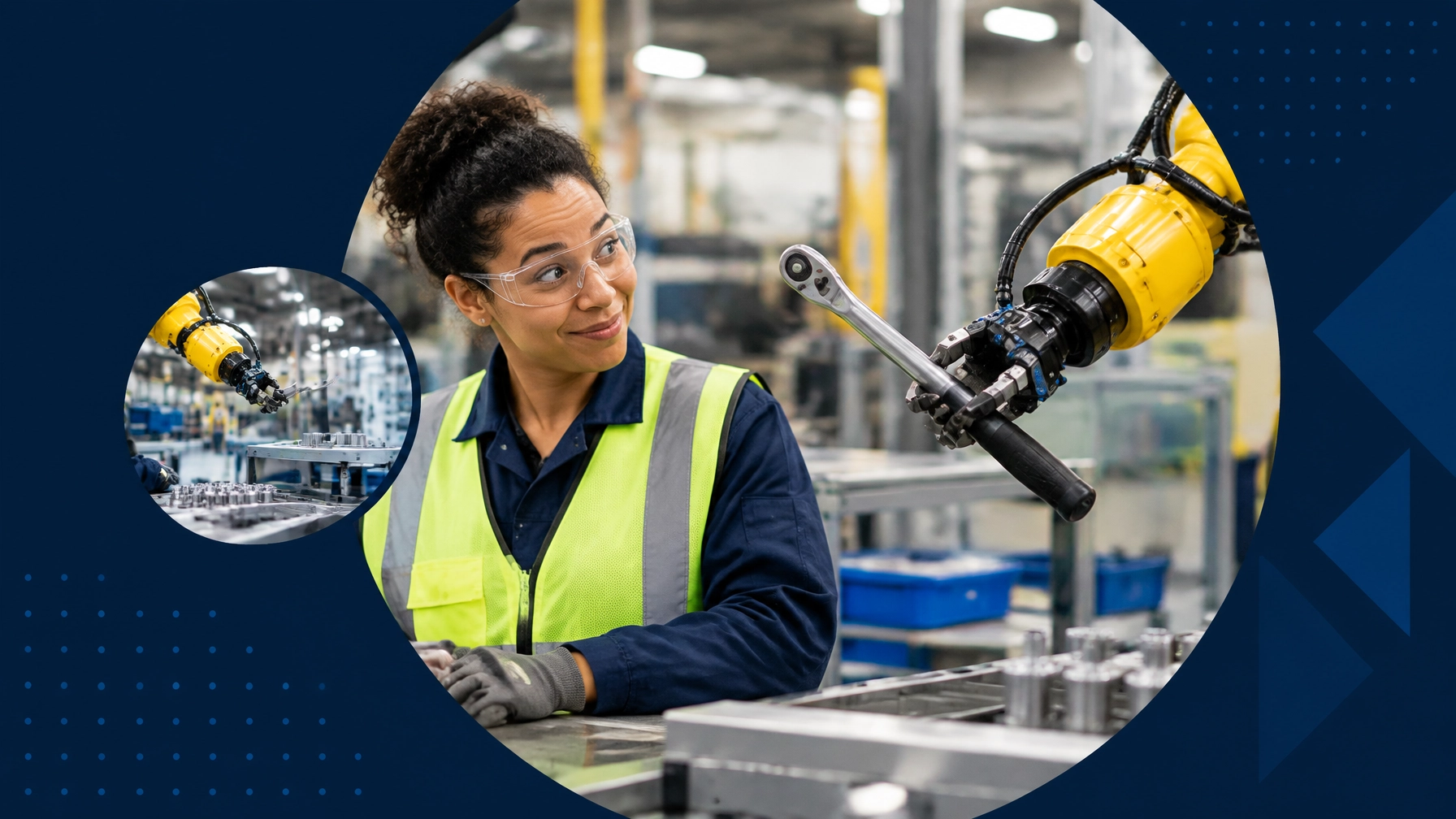
If you work as a machinist, welder, assembler, production-line operator, or maintenance technician, you may have thought AI disruption was mainly a desk-job story. New evidence suggests manufacturing is changing, too. That does not mean factory jobs are disappearing overnight. It does mean the skills employers value, and the work they hire people to do, are shifting.
For some experienced tradespeople, business ownership may be worth exploring as a different career arrangement. A franchise is not a guaranteed escape from technology or financial risk. It is one way to apply practical experience to a business, provided the opportunity fits your skills, finances, and goals.
The Hard Truth: AI Is Showing Up On The Factory Floor
In a September 30, 2026, Federal Reserve FEDS Note, Maria D. Tito examined online job postings for U.S. manufacturing employers. The findings challenge the idea that manufacturing is insulated from AI because much of its work is physical.
AI-related skill requirements in manufacturing postings surged in the second half of 2025 and reached 11% through July 2026, compared with 8% across the economy. In 2018, research cited in the note found that roughly 1% of vacancies in both manufacturing and the wider economy required AI skills. General computer skills appeared in about 35% of manufacturing postings, versus 24% economy-wide. Machine-learning requirements rose notably from mid-2025, while generative AI remained rare, under 1% of postings.
That shift is notable because task-based measures have tended to classify manufacturing as relatively low in AI exposure. The new posting data suggest employers may be adopting AI more actively than those conventional measures predict. For production occupations (including assemblers, machinists, and welders) AI requirements remain lower than for manufacturing postings overall. But the skill profile is changing even in these roles.
The note also found that manufacturing postings requiring AI skills advertised wages around 70% higher on average than all manufacturing postings. That figure is volatile and based on a small sample. For production occupations, the AI wage gap widened beginning in 2023 and averaged roughly 30% since then. These differences may reflect job type, location, or employer, not AI skills alone.
The limits matter. Online postings show what employers say they want, not who they actually hire. Lightcast data miss jobs filled through other channels and internal promotions. This is a hiring-demand indicator, not a layoff count or proof that AI is displacing workers. Still, a practical takeaway is clear: the hands-on job is changing shape. Keeping pace may increasingly mean competing for the AI-skilled version of that job.

Consider Ownership As A Different Arrangement, Not An Escape Hatch
If you are weighing what comes next, a franchise can offer a structured path to owning a business. You operate under a brand’s system and receive training and support in return for fees and ongoing obligations. You also take on responsibility for sales, staffing, customer service, and financial performance.
Your trade experience can be useful beyond the production line. Quality control, preventive maintenance, troubleshooting, and continuous improvement all involve identifying problems, following processes, and delivering consistent results. Those strengths may transfer to home improvement and repair, automotive services, or industrial and light-industrial staffing. The right fit depends on the actual business model: some owners perform technical work; others focus on managing teams and operations.
Do not assume that technical experience alone will make ownership easy. Running a franchise may require marketing, hiring, budgeting, and managing customer relationships. Ask what the owner does each day, how much time is spent selling versus delivering services, and whether the franchise requires you to perform the work yourself.

Match The Opportunity To Your Skills And Financial Reality
Start with your own requirements before comparing brands. Write down the capital you can invest without endangering household finances, the debt you can reasonably support, the income you need, your preferred location, and how involved you want to be in daily operations. Decide whether you want a hands-on role or to build and manage a team.
Then research businesses whose day-to-day work makes use of your strengths. Ask franchisors how they train owners without industry experience, what technical certifications or licenses may be required in your state, and what support they provide after opening. Confirm the local demand and competition for the service, not just the brand’s national pitch.
Consider technology as part of the business model. Ask whether software, robotics, or automated equipment is required; who owns customer and operating data; what ongoing technology fees apply; and how often upgrades are mandatory. Find out who pays when equipment fails or becomes obsolete. A business that uses automation still needs a workable plan for downtime, repairs, cybersecurity, and replacement costs.
Understand The Costs And Risks Before You Commit
THERE IS NO GUARANTEED INCOME. A franchise can require substantial startup capital and ongoing payments, and you may lose some or all of your investment. Royalties and other fees may be due even when a business is not profitable. A franchisor’s brand, training, and operating system do not guarantee customer demand or financial success.
Build a realistic operating budget that includes initial fees, equipment, vehicles, insurance, permits, payroll, benefits, rent if applicable, royalties, advertising contributions, software, maintenance, debt payments, and working capital. Model a slower-than-expected opening and a weak sales period. Ask a financial professional to review your assumptions and assess how much cash you need to keep available.
Technology brings additional risk. Automation might reduce some labor costs but increase equipment, subscription, maintenance, or training expenses. A required platform may change, and the franchise agreement may limit your ability to choose alternatives. Ownership is not immune to AI; it simply changes how you encounter the risks and make decisions.
Review The FDD And Speak With Franchisees
Before you buy, get the current Franchise Disclosure Document (FDD) and have an independent franchise attorney and financial professional review it. The FTC’s Consumer’s Guide to Buying a Franchise explains how to investigate an opportunity and evaluate disclosures.
Pay particular attention to:
- Items 5, 6, and 7: Initial fees, other recurring or occasional fees, and estimated initial investment.
- Item 19: Any financial-performance representations. Review what data they cover and what assumptions apply. Do not rely on earnings claims outside the FDD without professional guidance.
- Item 20: Outlet changes and contact information for current and former franchisees. Look for patterns of closures, transfers, or other changes.
- Technology disclosures: Review required equipment, software, upgrades, approved suppliers, and data access. Check the contract as well as the FDD.
Under the FTC Franchise Rule, the franchisor must generally give you the FDD at least 14 calendar days before you sign a binding agreement or pay the franchisor or an affiliate. The FTC’s Franchise Rule Compliance Guide provides more detail. Use that review period to ask questions, not to rush a decision.
Speak with both current and former franchisees. Ask what opening actually cost, how long it took to reach break-even, what the owner does each week, whether promised support arrived, and how technology upgrades affect costs. Ask former owners why they left. The SBA Franchise Directory can help you check whether a brand is listed for SBA financing purposes. Directory placement is not an SBA endorsement or a guarantee of success.
Talk With A FranLift Consultant
You do not have to sort through franchise options alone. FranLift’s matching process starts with your goals, budget, and preferred lifestyle, then helps identify franchise opportunities to investigate. The service is free to buyers because franchise companies cover the cost as part of their marketing budgets. That payment relationship is worth understanding; make your own decision and verify every opportunity through independent due diligence.

Talk With A FranLift Consultant to discuss what you want from your next chapter and which business models may fit. Start with your criteria, ask direct questions, and take the time to validate the numbers and the franchise relationship.
This article is for informational purposes only and is not legal, financial, tax, or investment advice. Franchise ownership involves risk, and results vary. Consult qualified professionals before making an investment decision.
Launch Beyond Boundaries.
