

At 3 a.m., the kitchen table can feel like the only place left to think.
The house is quiet. Your phone is face down. The papers in front of you: divorce documents, a severance letter, a retirement account statement, or a list of unanswered questions: seem to describe a life that no longer exists.
You may be asking:
- What do I do now?
- How do I rebuild my income?
- Who am I without this job, marriage, daily routine, or parenting role?
- Can I start over without starting everything from zero?
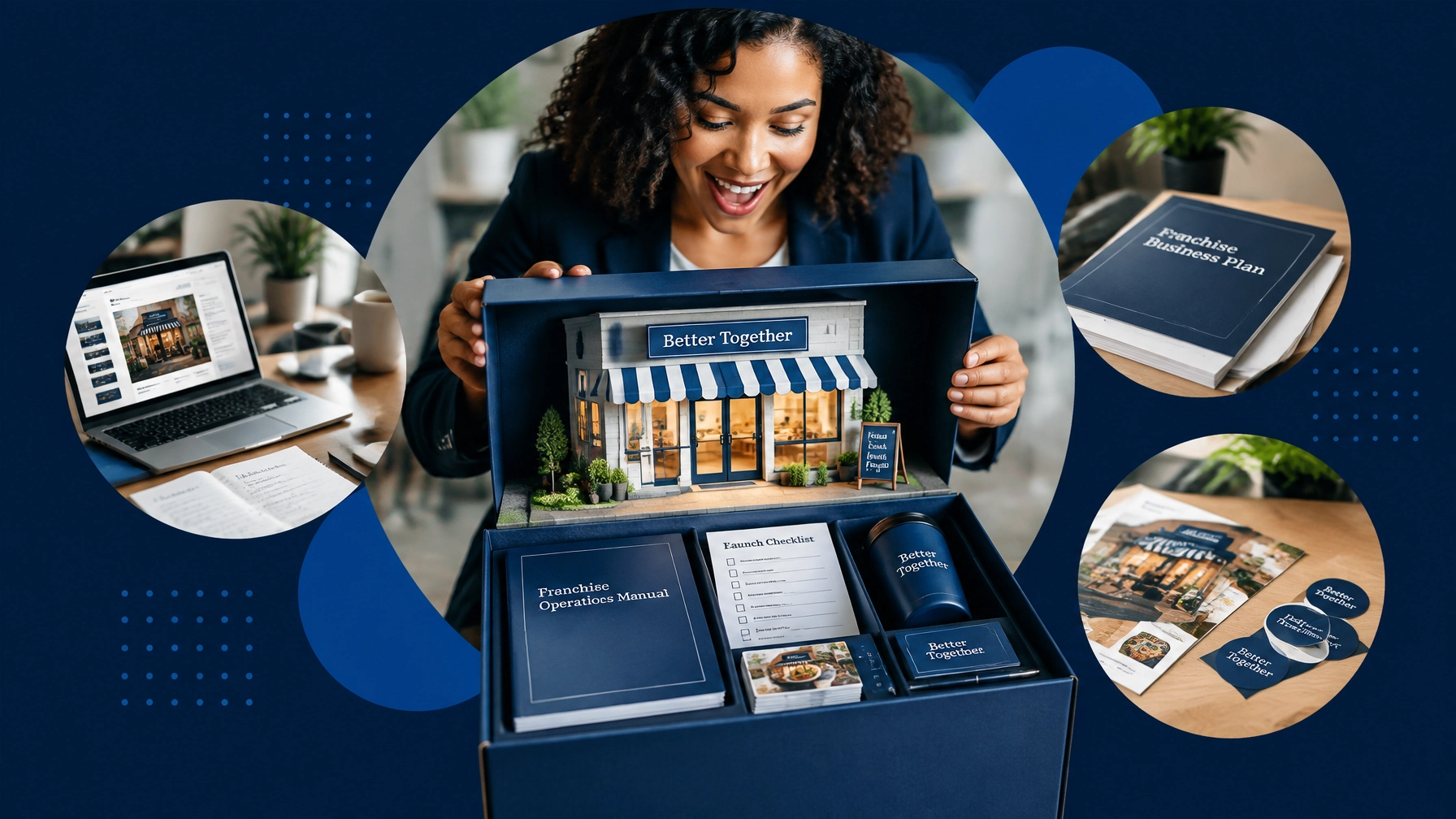
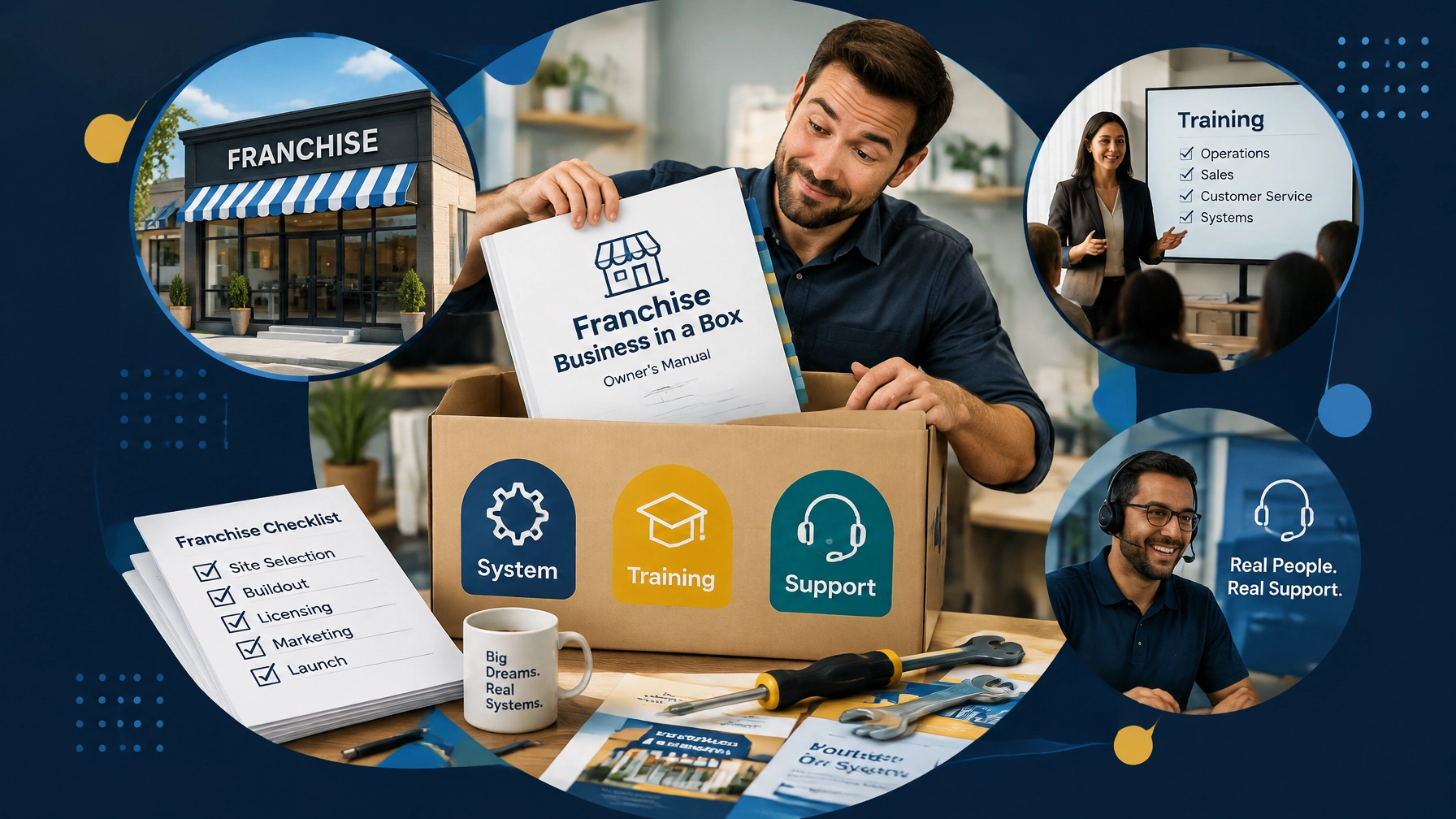
A franchise may not solve the personal pain of a major life transition. It can, however, give you a practical structure for rebuilding. Think of it as a business in a box: a brand, operating system, training, marketing framework, and support network packaged into a business model you can evaluate and operate.
That structure matters when your life feels anything but structured.
Divorce: Rebuilding Financial Independence
Divorce can change your finances, schedule, housing, and sense of identity all at once. You may need a new source of income, but you also need flexibility around custody, legal appointments, and rebuilding your personal life.
A franchise can provide a defined path toward ownership without requiring you to invent every process alone. The franchisor may provide training, operating procedures, marketing guidance, technology, and vendor relationships. You still have to execute, manage risk, and make difficult decisions: but you are not designing the entire business from a blank page.
Start by defining your non-negotiables:
- How much capital must remain untouched?
- What schedule works with your custody or family responsibilities?
- Do you want to work in the business every day?
- Would a home-based, service, or semi-absentee model fit better?
- What income do you realistically need, and by when?
If divorce is your trigger, do not make a rushed investment decision simply because you want your old life replaced quickly. Read FranLift’s guide to starting over after divorce, job loss, or burnout, then discuss your financial position with an independent professional.
Bereavement: Finding Structure Without Rushing Grief
After the loss of a spouse or loved one, ordinary routines can disappear. There may be fewer conversations, fewer obligations, and too much empty time. A business can offer purpose and connection, but it should not become a way to outrun grief.
The right franchise may give you a steady project and a community of people to work with. You may have a team to lead, customers to serve, and a weekly operating rhythm to follow. That structure can be grounding.
But timing matters. Before moving forward, ask yourself whether you are choosing a business because it fits your goals: or because you are trying to make the pain stop. Talk with your financial advisor, family, and trusted professionals. Look for a model with strong training and support rather than one that depends entirely on your ability to improvise under pressure.
A business in a box does not remove uncertainty. It reduces the number of unknowns you must solve at the beginning.
Job Loss: Turning a Forced Exit Into a Planned Launch
A layoff can damage more than your paycheck. It can make you question your professional value, especially after years of building a career inside one company.
Franchise ownership can give experienced professionals a way to transfer their skills into a new setting. Sales, operations, project management, hiring, customer service, finance, and leadership experience can be useful across many franchise categories: even industries where you have no prior experience.
However, do not put every dollar of severance into a new business. Build two budgets:
- The business budget: franchise fee, equipment, technology, real estate, inventory, marketing, professional fees, and working capital.
- The household budget: mortgage or rent, insurance, debt, healthcare, food, transportation, and the cash required to support your family during the ramp-up period.
Your goal is not simply to afford the opening. Your goal is to survive the time between opening and consistent cash flow.
Empty Nest And Retirement: Replacing Routine With Direction
When children leave home or a long career ends, freedom can arrive with an unexpected problem: too much empty space.
The calendar that once required military-level logistics suddenly has no appointments. The work that once gave you status and daily momentum disappears. You may not need another 60-hour job. You may need a meaningful, structured way to stay active and connected.

For empty nesters and retirees, the key question is not, “What franchise is popular?” It is, “What role do I want this business to play in my life?”
Possible answers include:
- An owner-operated business that keeps you active
- A management business that uses your leadership background
- A semi-absentee model supported by a general manager
- A service business with limited inventory
- A local business that creates community connections
Be precise about your desired hours, travel tolerance, physical demands, and income requirements. Retirement capital deserves special protection. A franchise should complement your long-term financial plan: not put your entire retirement at risk.
Career Burnout: Do Not Buy Your Old Stress In A New Package
Burnout often comes from a mismatch between your life and the way you are spending it. You may have succeeded professionally while losing control of your time, health, or relationships.
Buying a franchise can be a fresh start, but only if you choose a model that does not recreate the same problem.

Ask direct questions about the daily reality:
- How many hours do franchisees actually work?
- Are evenings and weekends required?
- Can staffing reduce owner workload?
- What happens when an employee quits?
- How much sales responsibility remains with the owner?
- Is the business dependent on the owner being available at all times?
Do not rely on the phrase “semi-absentee” without verifying what it means in practice. Speak with franchisees who operate the model. If your version of success requires manageable hours, make that a financial and operational requirement: not a hopeful assumption.
Why Franchising Can Be A Business In A Box
Starting from scratch means creating the brand, pricing, customer journey, vendor relationships, hiring process, technology stack, marketing plan, and operating procedures yourself.
Franchising may provide many of those components already. You pay for access to the system through fees and ongoing royalties, and you agree to follow the franchisor’s standards. That trade-off is important:
- You gain: structure, training, brand guidelines, operating systems, and ongoing support.
- You give up: some independence, flexibility, and control over how the business operates.
The model is not risk-free, and it is not passive by default. It is a framework. Your job is to determine whether that framework fits your finances, skills, energy, and preferred lifestyle.
What To Do Before You Buy A Franchise
Start with a written buyer profile. Include your available capital, income needs, preferred schedule, location, management experience, and tolerance for sales, staffing, and customer-facing work.
Then follow a disciplined process.
Review The Full Investment
The franchise fee is only one cost. Review equipment, leasehold improvements, technology, insurance, inventory, payroll, marketing, professional services, and working capital. Keep a personal emergency reserve separate from the business investment.
Read The Franchise Disclosure Document
In the United States, the Franchise Disclosure Document, or FDD, contains 23 required disclosure items. Pay close attention to:
- Item 7: Estimated initial investment
- Item 11: Training, assistance, advertising, and systems
- Item 17: Renewal, termination, transfer, and dispute terms
- Item 19: Financial performance representations, if provided
- Item 20: Franchisee openings, closures, transfers, and contact information
The Federal Trade Commission’s Franchise Rule requires the FDD to be provided at least 14 calendar days before you sign a binding agreement or pay money related to the franchise sale.
Read the entire document. Then have a franchise attorney review the FDD and franchise agreement before you commit.
Call Existing Franchisees
Ask current and former franchisees what the business is actually like. Ask how many hours they work, how long it took to reach break-even, what surprised them, whether startup costs matched the FDD, and how responsive the franchisor is when problems arise.
Ask one question that often reveals the most:
Knowing what you know now, would you invest again?
Build A Conservative Plan
Model a slower ramp-up, higher expenses, and lower early revenue than your best-case scenario. If the business only works under perfect conditions, it may not be the right business for your rebuild.
How A Franchise Consultant Shortens The Search
Thousands of franchise opportunities exist across service, education, home improvement, wellness, food, hospitality, retail, automotive, and other categories. Searching them all is not a strategy. It is a second full-time job.
A franchise consultant helps narrow the field based on your goals, budget, skills, and lifestyle. The process should include honest conversations about your financial position and the kind of work you actually want to do.

FranLift provides franchise matching and research at no charge to prospective franchise owners because participating franchise companies pay consultant fees from their franchise development budgets. The team can help you compare brands, arrange introductions, identify funding resources, and connect you with franchise attorneys and other professionals.
You can learn how FranLift’s matching process works or request a free consultation.
Build The Next Chapter On Purpose
Life falling apart does not mean your future is over. It means the old structure no longer works.
A franchise will not erase divorce, grief, job loss, an empty nest, retirement boredom, or burnout. It can give you a practical system for moving forward while you rebuild your income, confidence, routine, and sense of direction.
Start with your life: not a franchise category. Define what you need the business to support. Then evaluate opportunities with patience, evidence, and professional advice.
When you are ready to move, FranLift can help you Launch Beyond Boundaries.
Risk disclaimer: Franchise ownership involves financial risk, and there are no guarantees of income, profitability, or success. Review all franchise documents carefully and consult qualified legal, accounting, financial, and tax professionals before making an investment decision.
