

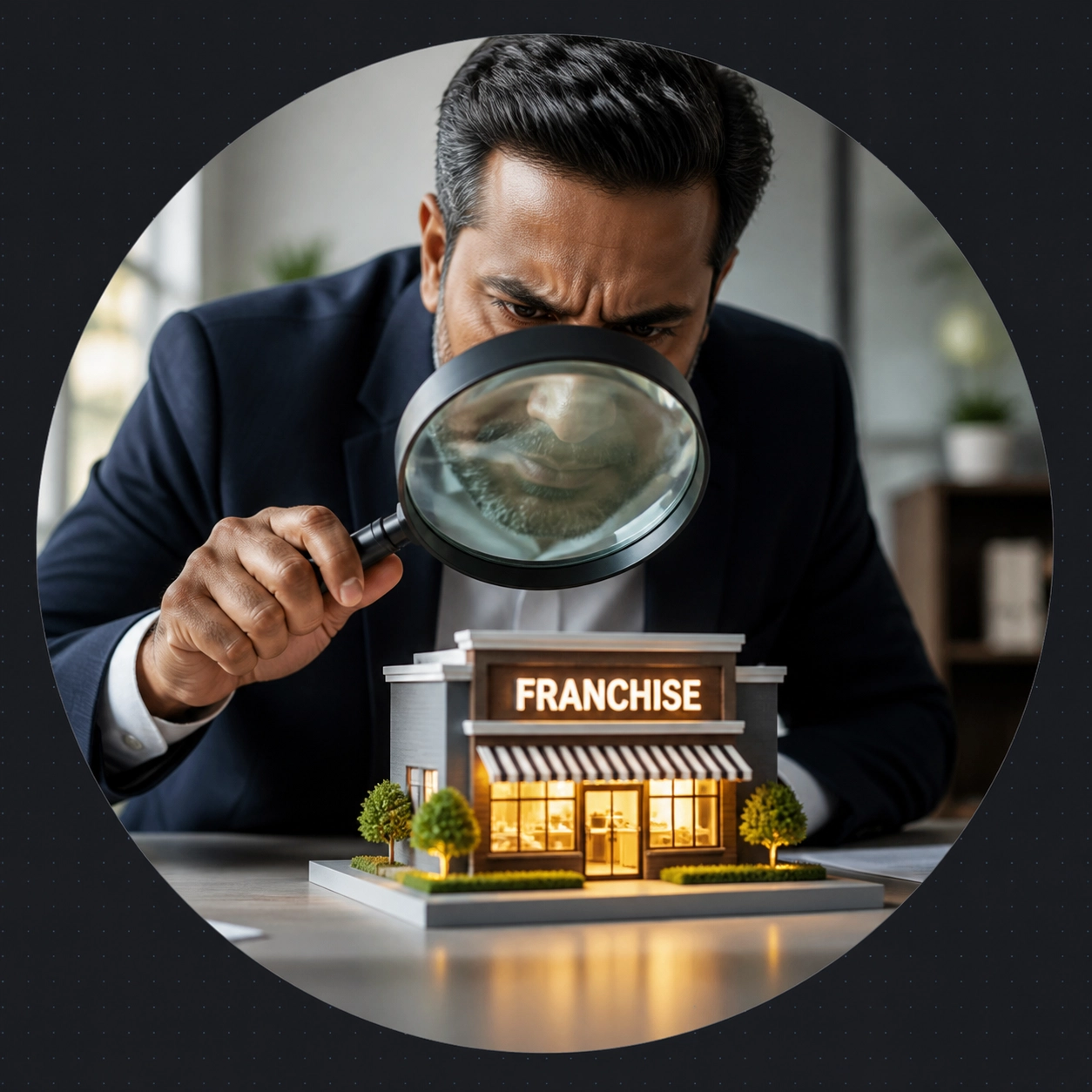
Most people who look at franchise opportunities see a brand they love, a product they enjoy, or a logo that looks professional. They see the "what." But a seasoned investor: the kind who builds a multi-unit empire while others struggle to break even: looks for the "how." They aren't just buying a business; they are buying a predictable, scalable cash-flow engine.
If you are looking at a franchise for sale, you need to step away from the emotional appeal of the smoothie shop or the boutique gym and start thinking like a forensic accountant with an appetite for growth. Evaluating a franchise isn't about finding a "cool" business; it’s about identifying a system that mitigates risk while maximizing your return on time and capital.
Deconstructing the Spreadsheet Soul of a Brand
The first place a sophisticated buyer looks is the Franchise Disclosure Document (FDD), specifically Item 19. This section, which outlines Financial Performance Representations, is the heart of your investigation. However, a seasoned investor knows that Item 19 is often a "best-case" or "average" scenario. It’s a starting point, not a guarantee.
When you analyze these numbers, you aren't just looking at the Average Unit Volume (AUV). You are looking for the story behind the numbers. Are the high performers concentrated in one specific geographic region? Does the "top tier" represent 5% of the network or 50%? You need to build your own pro-forma P&L that accounts for your specific market's labor costs, real estate prices, and local taxes. If the corporate office is based in a low-cost state but you are opening in a high-cost metropolitan area, those "average" margins in the FDD are essentially fiction for your purposes.

Stress-Testing Your Financial Assumptions
A common mistake in how to buy a franchise is assuming that "average" is the baseline. Seasoned investors do the opposite. They run a "Stress-Test P&L." What happens to your bottom line if labor costs spike by 10%? What if the supply chain for your core product gets disrupted and COGS (Cost of Goods Sold) increases? What if your revenue is 20% lower than the system average during your first year?
If the business model breaks: meaning it can't pay its own bills: under any of those scenarios, it might not be a resilient investment. You are looking for a "margin of safety." The best franchise opportunities aren't the ones with the highest potential upside; they are the ones with the most protected downside. You want a business that remains profitable even when the economy catches a cold.
The Forensic Art of Franchisee Validation
Once the numbers make sense on paper, it's time to see if they hold up in the real world. This is where "validation" comes in. The FDD includes a list of current and former franchisees. A rookie calls two people and asks, "Are you happy?" A seasoned investor calls ten people and asks about the "Safety Net."
You want to know exactly what happens when things go wrong. How did the franchisor respond during the last market downturn? Is the support team actually helpful, or are they just "royalty collectors"? More importantly, you should speak to the bottom-quartile performers. Ask them why they think they aren't hitting the system averages. Their answers will tell you more about the risks of the business than any corporate brochure ever could. You are looking for consistency. A system where every franchisee has a wildly different experience is a system without a reliable playbook.

Evaluating the Ecosystem and Alignment
A franchise is a long-term marriage. You are tying your financial future to the decisions of a corporate team. Therefore, you must evaluate the franchisor’s health as much as the individual unit’s potential. A key indicator of a healthy system is where the franchisor makes their money.
If a franchisor makes the majority of their income from "initial franchise fees" (the money you pay to join), their incentive is to sell as many units as possible, regardless of whether those units succeed. If they make the majority of their income from "ongoing royalties," their success is directly tied to your profitability. You want a partner who is incentivized to keep your lights on and your margins high. Look for a leadership team with a clear vision for the next ten years, not just a plan to sell more territories next month.
Scalability and the Hidden Exit Strategy
The final lens of a seasoned investor is scalability. If you are buying a business that requires you to be there 60 hours a week to make a profit, you haven't bought an investment; you've bought a high-stress job. A true franchise investment should have a path to semi-absentee or multi-unit ownership.
Can the systems be managed by a hired manager? Is the technology stack robust enough to give you "eyes-on" visibility from a remote dashboard? And finally, what is the resale value? Sophisticated buyers always keep the "exit" in mind. They look for brands that are attractive to private equity or other multi-unit operators. If the business is too dependent on your personal charisma or specialized skills, it will be much harder to sell when you’re ready to retire to the beach.

Making the Decision with Confidence
Navigating the world of franchise opportunities can feel like walking through a hall of mirrors. Every brand claims to be the "next big thing," and every salesperson has a polished pitch. But when you apply the rigors of professional investment: focusing on unit economics, stress-testing, deep validation, and long-term alignment: the noise clears away.
You don’t have to do this alone. At FranLift, we specialize in this kind of deep-dive analysis. We act as your outsourced research department, helping you filter through thousands of brands to find the one that actually matches your financial goals and lifestyle. Our goal is to help you move from a "prospective buyer" to a "confident owner."
If you’re ready to stop browsing and start investing, contact us today for a free consultation. We’ll help you peel back the layers of the FDD and find a business that’s built for the long haul.

Unlock Your Future with FranLift
Bridging the gap between corporate ambition and entrepreneurial freedom through expert franchise matchmaking.
