


A layoff does not always begin with an email from human resources.
Sometimes, it begins with a hiring freeze. Then a resignation goes unfilled. A team absorbs the workload. Software handles scheduling, performance tracking, recruiting, and reporting. Six months later, the promotion that used to lead to management no longer exists.
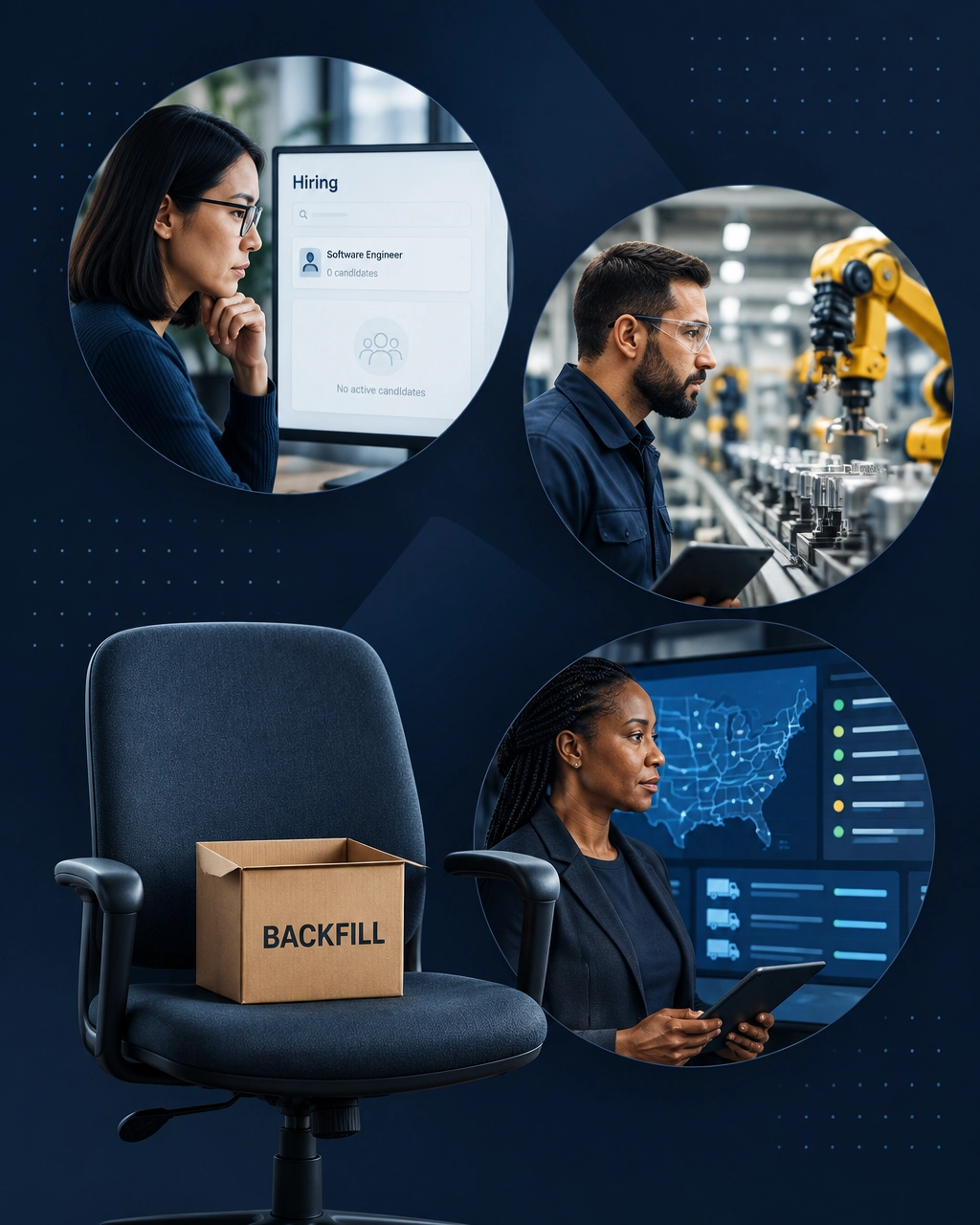
This is the quiet layoff: fewer openings, fewer backfills, narrower career ladders, and more work assigned to the employees who remain.
For professionals in IT, coding, manufacturing, trucking, and logistics, the relevant question is not whether artificial intelligence will change work. It is whether you will build an ownership option before your employer’s automation strategy limits your options.
Franchise ownership is not a guaranteed escape from economic risk. It is a different economic structure: one built around customers, operations, systems, and potential equity rather than a single employer’s payroll decision.
Launch Beyond Boundaries.
The Hard Truth: AI Displacement Often Arrives Quietly
The loud version of automation is a factory closure or a mass layoff announcement. The more common version may be less visible:
- A role is eliminated through attrition.
- A hiring requisition remains “paused.”
- A department is told to increase output without adding headcount.
- An algorithm screens applicants, assigns schedules, or scores performance.
- A manager is replaced by a dashboard that recommends staffing levels.
- A career ladder loses its entry-level rung.
The OECD describes algorithmic management as technology that can automate or assist traditional management functions, including issuing instructions, monitoring workers, evaluating performance, and setting targets.
That matters because AI does not need to eliminate an entire occupation to weaken a career. It only needs to reduce the number of people required to perform the work.
Research from SHRM found that approximately 15.1% of U.S. employment is in jobs where at least half of tasks are already automated, while 7.8% of employment involves jobs where at least half of tasks are performed using generative AI. SHRM also emphasizes that automation exposure is not the same as certain job loss. Regulation, physical presence, human judgment, and customer relationships can slow or prevent full replacement.
The risk is still substantial. Millions of roles can be reshaped without a single dramatic announcement.
IT And Coding: The Career Ladder Is Narrowing
AI-assisted development tools can generate code, write documentation, test applications, debug errors, and summarize technical material. Senior developers remain valuable for architecture, security, systems integration, compliance, and business judgment.
However, companies may need fewer junior contributors to support the same output.
The Bureau of Labor Statistics projects software developer employment to grow 15.8% from 2024 to 2034, as organizations invest in software and AI systems. At the same time, BLS has projected a decline for computer programmers because routine programming tasks can be automated or absorbed into broader software development roles.
The distinction is important. AI may create demand for advanced technical work while reducing the number of traditional entry points. An experienced developer may keep a job, but the next generation may find fewer opportunities to enter, learn, and advance.
Manufacturing: The Dashboard Sets The Pace
Manufacturing has used robotics and process automation for decades. AI adds predictive maintenance, automated inspection, production scheduling, inventory planning, quality control, and real-time workforce analysis.
A plant may not eliminate every skilled employee. It may simply need fewer people to achieve the same output.
BLS projects production occupations to lose approximately 99,600 jobs from 2024 to 2034, even though manufacturing employment overall is expected to remain broadly stable. Roles involving repetitive production tasks face more automation pressure, while technical positions in equipment maintenance, quality, safety, and process oversight may become more valuable.
For manufacturing professionals, the challenge is not just whether the plant remains open. It is whether their current responsibilities remain large enough to support their income and advancement.
Trucking And Logistics: The Route Changes Before The Driver Does
Trucking still has strong demand. BLS projects approximately 237,600 annual openings for heavy and tractor-trailer truck drivers from 2024 to 2034.
That does not remove the long-term pressure from route optimization, automated dispatch, warehouse robotics, telematics, driver-assistance systems, and autonomous vehicle development.
Disruption may first appear through route consolidation, fewer dispatchers, lower mileage, reduced overtime, or fewer employees handling the same freight volume. Local delivery, customer relationships, irregular sites, and complex judgment may remain difficult to automate. Standardized long-haul and warehouse processes may be easier targets.
The decision window is therefore open, but it is not infinite.
The Pivot: Why Franchise Ownership Deserves Serious Consideration
Corporate employment provides income in exchange for specialized labor. Your position can still depend on a budget, a reorganization, a technology roadmap, or a hiring manager’s decision.
Franchise ownership changes the relationship. You operate a business built around customers, employees, processes, and local demand. You still face risk, but you gain more influence over the business’s direction and the assets you develop.
That control can include:
- Choosing the market and territory
- Building a team and management structure
- Improving operating systems
- Developing customer relationships
- Selecting a hands-on or manager-led model
- Creating an enterprise that may be transferable or sellable
Your existing skills may transfer more directly than you expect.
An IT professional may evaluate managed technology services, cybersecurity, digital marketing, computer repair, or STEM education concepts. A manufacturing leader may bring expertise in quality control, scheduling, maintenance, inventory, safety, and process improvement. A trucking or logistics professional may understand dispatch, fleet operations, compliance, route planning, and customer service better than a first-time owner.
The best franchises to own are not automatically the largest brands. They are concepts that fit your capital, operating preferences, local demand, risk tolerance, and desired level of involvement.

How To Buy A Franchise Without Buying A Problem
Learning how to buy a franchise begins with disciplined evaluation, not with choosing a recognizable logo.
Start With A Financial And Operating Profile
Define your available investment without exhausting your personal reserves. Include the franchise fee, equipment, build-out, lease deposits, inventory, insurance, licenses, technology, payroll, marketing, and working capital.
Then determine the operating model you want. Some concepts require an owner-operator. Others support a manager-led structure. A semi-absentee model may still require substantial oversight, hiring, and financial supervision. Treat “semi-absentee” as an operating description, not a promise of passive income.
Review The Franchise Disclosure Document
Before you commit to a franchise for sale, request the current Franchise Disclosure Document, or FDD.
Under the Federal Trade Commission Franchise Rule, a franchisor generally must provide the FDD at least 14 calendar days before you sign a binding agreement or pay the franchisor or an affiliate.
Pay particular attention to:
- Items 5–7: Initial investment, recurring fees, royalties, and required expenses
- Item 19: Financial performance representations, if provided
- Item 20: Openings, closures, transfers, terminations, and franchisee contacts
- Item 3: Litigation history
- Item 4: Bankruptcy history
- Item 21: Franchisor financial statements
- Territory, supplier, renewal, termination, transfer, and non-compete provisions
Item 19 is optional, but if a franchisor makes financial performance representations, they generally must be included there and supported by a reasonable basis. Item 20 is especially useful because it helps you evaluate system movement and contact current and former franchisees.
Speak with multiple franchisees. Ask what their first-year costs were, how long stabilization took, which assumptions proved inaccurate, how support worked in practice, and whether they would make the same decision again.
Stress-Test The Economics
Build your own conservative projection. Include payroll, rent, insurance, technology, customer acquisition, taxes, debt service, repairs, and a realistic owner salary.
A lender’s approval is not proof of profitability. A franchisor’s forecast is not a guarantee. An attorney’s review does not replace financial analysis.
Use a franchise attorney before signing. Consider a CPA for tax and cash-flow analysis. If you pursue SBA funding, verify brand eligibility through the SBA Franchise Directory and prepare the FDD, franchise agreement, business plan, personal financial information, and proof of equity.

A Practical Timeline For Getting Ahead Of The Quiet Layoff
You do not need to resign immediately. You do need a decision process.
Within 30 days: Document your transferable skills, personal financial runway, preferred location, desired work schedule, and target investment. Identify whether you want to operate daily, manage a team, or build a manager-led business.
Within 60 days: Research franchise opportunities across several industries. Compare investment levels, recurring demand, staffing requirements, territory, support, and owner involvement. Eliminate concepts that do not fit your capital or lifestyle.
Within 90 days: Request FDDs, speak with current and former franchisees, model conservative cash flow, and engage an independent franchise attorney. Begin lender conversations if financing is required.
Within 120 days and beyond: Complete franchisor validation, secure financing if appropriate, select a territory, review final agreements, and make a decision based on evidence, not fear or urgency.
Why Work With A Franchise Consultant?
There are thousands of franchise concepts across commercial services, home improvement, education, wellness, automotive, logistics, food, retail, and professional services. Searching without a framework can create more noise than clarity.
A qualified franchise consultant should help you clarify:
- How much capital you can invest safely
- Whether you want an owner-operated or manager-led model
- How quickly you need income
- Which industries fit your skills
- Where you want to operate
- How much hiring and management you are prepared to handle
- What level of risk you can accept
FranLift provides a free consultation for prospective franchise owners because participating franchise companies cover the cost through their franchise development budgets. The process includes initial discovery, market research, curated matching, introductions to brands, and connections with franchise attorneys and funding partners.
The purpose is not to push you toward the most expensive option. It is to narrow the field to realistic franchise opportunities that fit your goals, budget, and preferred ownership structure.

Make The Decision Before The Ladder Disappears
AI will not eliminate every IT, manufacturing, or trucking job. BLS data shows continued demand in several technology and transportation occupations. But the quiet layoff is already changing how careers develop: fewer entry-level roles, fewer backfills, tighter teams, and more automated decisions about hiring and performance.
Franchise ownership is not risk-free, and it is not a shortcut. It is an option for professionals who want to convert transferable skills into customer relationships, operating expertise, and potential business equity.
Start with your balance sheet. Define your operating model. Review the FDD. Contact franchisees. Hire independent professionals. Then decide whether ownership fits your future.
Contact a FranLift franchise consultant for a free consultation.
FranLift does not provide legal, tax, or financial advice. Franchise ownership involves risk, and there is no guarantee of income or profitability. Consult qualified independent professionals before investing capital or signing agreements.
© 2026 FranLift. All rights reserved.
Launch Beyond Boundaries.
