


The alarm still goes off at medication time.
When your parent dies, the funeral is not the only thing that ends. The 7 AM medication reminder may still sound. The appointments, pharmacy trips and emergency-room routines may have organized your days for years. Then, suddenly, no one needs you to keep that schedule.
The pill organizer sits there, unused. The phone alarm goes off, and there is nobody left to remind. A week that once seemed packed from wall to wall is nearly erased from the kitchen calendar. One small dentist appointment remains circled.
People ask, “How are you holding up?” You may not know how to answer. You might feel grief, exhaustion, emptiness, and even relief. Relief does not mean you loved your parent any less. It can mean the demands of caregiving have stopped. More than one feeling can be true at once.
If you are considering what comes next, exploring franchise ownership may help you think about a new routine and a meaningful goal. It is a decision to examine carefully, not a solution to grief.
When The Caregiver Role Disappears
The years of ER visits and pharmacy runs can seem compressed into one pill organizer nobody fills anymore. Tasks that once gave shape to the day are gone, but the habits and sense of responsibility do not disappear on command.
Research on former family caregivers of people with dementia describes a “post-caring void” and a feeling of being “between worlds”: no longer in the daily role of caregiver, but not yet settled into what comes next. The transition can include grief for the person and for the role, along with uncertainty about how to use newly available time. (See “When Caregiving Ends: The Experiences of Former Family Caregivers of People With Dementia,” The Gerontologist.)
The scale of family caregiving is large, though every person’s experience is their own. AARP and the National Alliance for Caregiving’s Caregiving in the U.S. 2025 estimates that about 63 million Americans are caregivers, including 47.8 million unpaid family caregivers of adults. Those figures describe caregivers broadly; they are not a measure of people currently grieving a parent or ready to start a business.
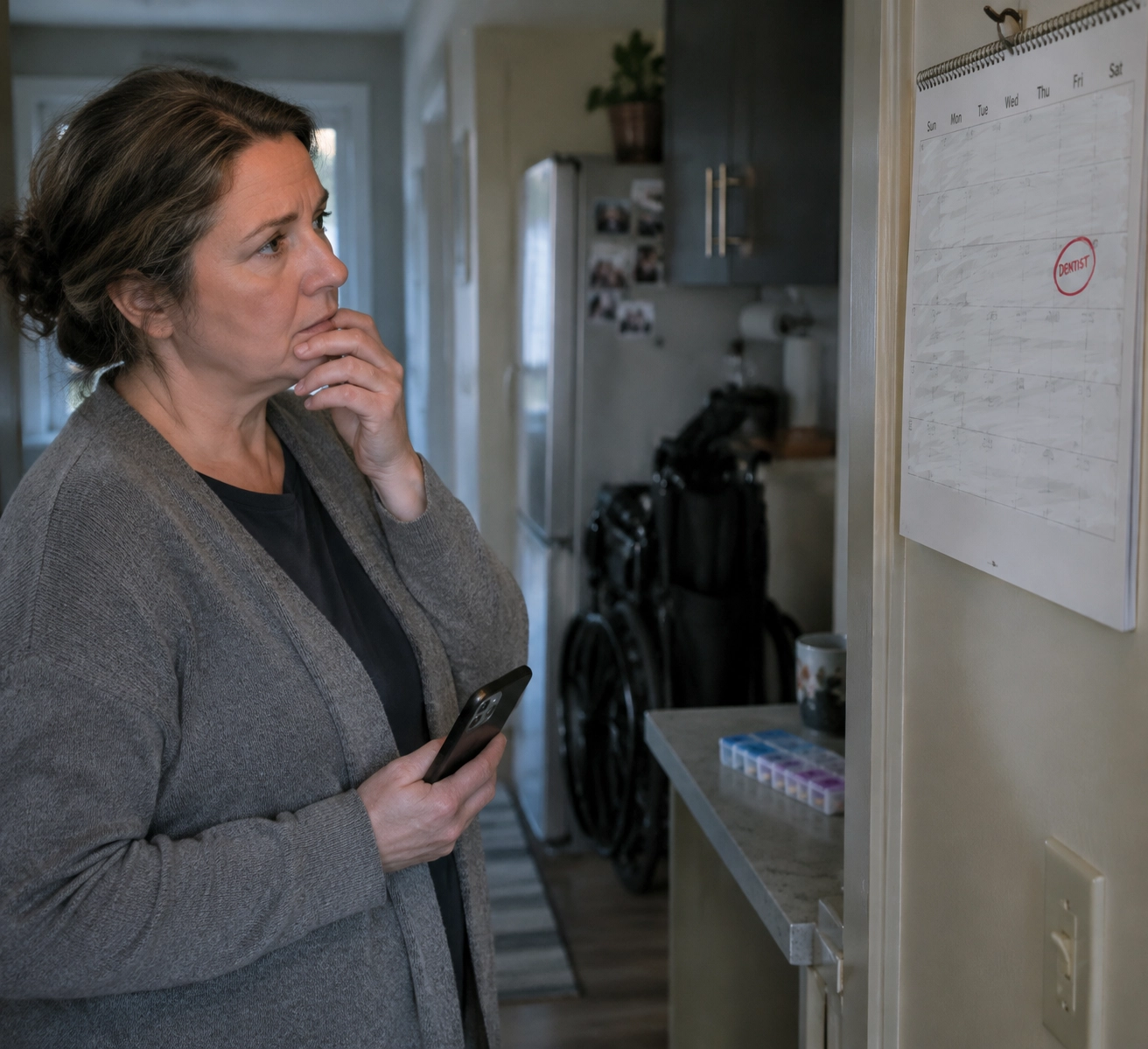
A caregiving calendar empties fast.
A Business Is Not A Therapist
Grief is not a business problem, and a franchise is not grief treatment. Starting a business will not bring your parent back, resolve bereavement, or guarantee a renewed sense of purpose. Do not make a major financial commitment because you feel pressure to fill the silence or prove that you are moving on.
If grief is persistent, overwhelming, or making it hard to function, consider speaking with your doctor or a grief counselor. Support from a qualified professional can help you decide what you need. Work and purpose can be legitimate choices for someone who is grieving and functioning, but they are not substitutes for care.
There is no deadline for making a decision. You can explore an idea without committing to it. You can also decide that now is not the time.
What A Franchise Can, and Cannot, Provide
A franchise is sometimes described as a business in a box. That can mean training, operating manuals, established procedures, brand standards, ongoing support and a network of other owners. Those tools may give a new owner structure and a starting point for learning a business.
But the box does not run itself. You are still responsible for following the system, serving customers, managing employees and finances, and meeting the terms of your agreement. Training is not a promise of success, and support does not remove the demands of ownership.
Before comparing the best franchises to own, be honest about your capacity. How much energy, time and money can you commit while also caring for your health and family? Would you want a people-facing role, a team to manage, or work that happens mostly behind the scenes? What kind of schedule would feel sustainable, not just exciting today?
Compare owner-operator opportunities with semi-absentee models, but read the details closely. “Semi-absentee” never means no work. It usually means an owner delegates some daily tasks while retaining management, hiring, financial and performance responsibilities. Ask current and former owners what their weeks actually look like.

The same hour, a different alarm.
Evaluate The Franchise Before You Invest
Start with the Franchise Disclosure Document, or FDD. Under the FTC Franchise Rule, a franchisor generally must provide the FDD at least 14 calendar days before you sign a binding agreement or pay the franchisor or an affiliate. Use that time to review it carefully, not as a countdown to a decision.
Pay attention to two sections:
- Item 19: This may include financial performance information, but not every franchisor provides it. Treat any figures as information to examine, not a promise about what you will earn. Ask what costs are excluded and whether the results reflect owners with circumstances like yours.
- Item 20: Review franchise openings, closures, transfers and ownership changes. Contact current and former franchisees listed in the FDD, not only owners recommended by the franchisor. Ask about workload, support, customer acquisition, staffing, expenses and what surprised them.
Have an independent franchise attorney review the FDD and agreements. Ask a CPA to assess the financial assumptions, startup costs, cash needs and potential impact on your household finances. These professionals work for you and can help identify questions a sales conversation may not answer.
If you expect to use financing, check the SBA Franchise Directory. A listing is not an endorsement or a guarantee of success; it concerns SBA financing eligibility. The SBA’s 7(a) loan program may support eligible business purposes, but eligibility and approval depend on the business, borrower and lender.
Try On The Work Before You Choose
A business plan can sound appealing on paper and feel very different on a Tuesday morning. Ask whether you can shadow a franchisee. If possible, run a mock week: map out customer calls, staff check-ins, bookkeeping, travel, family commitments and time off. Include the unglamorous tasks, not just the parts you look forward to.
Notice how you feel about the work itself. Does the routine offer a kind of structure you want? Is there enough room for appointments, rest and the unpredictable parts of life? You are not looking for a business to fill every empty hour. You are checking whether its real demands fit the life you want to build.
A franchise consultant can help you compare brands and business models against your goals, budget and preferred level of involvement. That conversation should help clarify options, not rush you toward a purchase.

Deora Pollock, FranLift franchise consultant, in a professional consultation setting.
Take The Next Step At Your Own Pace
You do not need to turn grief into a grand plan. Start with a few practical steps:
- Write down the hours, responsibilities and financial risks you can realistically take on.
- Explore franchise models without committing; compare owner-operator and semi-absentee schedules.
- Read the FDD, speak with current and former franchisees, and consult an independent attorney and CPA.
- Test-drive a typical workweek before making a decision.
- Learn how FranLift helps buyers compare franchise opportunities. FranLift’s services are free to buyers; franchisors cover the cost.
- When you are ready, start a free conversation with FranLift.
The right next step may be a conversation, a period of rest, professional grief support, or a careful look at business ownership. You get to decide the pace.
Being needed somewhere at 7 AM was never just about the pills.
Launch Beyond Boundaries.
This article is for general informational purposes only and is not legal, tax, or financial advice. Consult qualified professionals about your specific situation.
© 2026 FranLift.
