

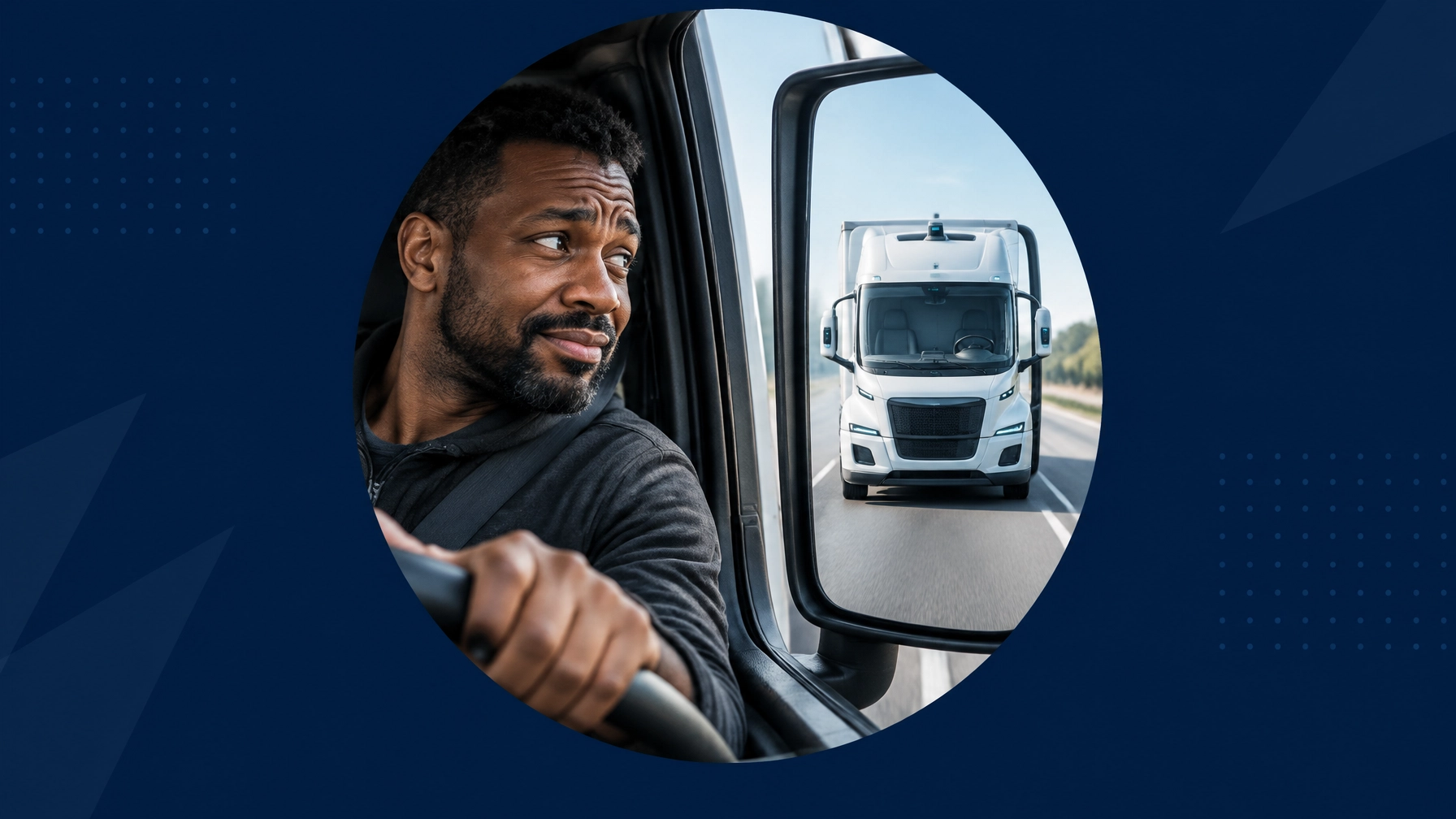
The good news is real: truck transportation employment finally ticked above its year-earlier level. The risk is assuming that means the freight business is returning to the way it was.
The first year-over-year increase in 41 months is welcome news for drivers and the people who depend on trucking work. But it lands at the same time that companies are investing in autonomous highway transport, software-driven warehouse robots and new logistics systems. The jobs returning today and the jobs that may change tomorrow can exist in the same economy.
That is the uncomfortable timing. While workers take a breath, long-haul routes, warehouse workflows and investment priorities are being reconsidered. The freight map is not changing everywhere at once. It is being redrawn route by route.
The Hard Truth: A Modest Jobs Gain, A Much Bigger Structural Shift
According to FreightWaves’ report on September employment data, truck transportation employment reached 1,473,100 in September 2026, up 2,600 from August and 800 from a year earlier. It was the first positive year-over-year comparison since April 2023-a 41-month stretch. The increase is real, but small. FreightWaves also noted that the figures could be revised.
Meanwhile, a Journal of Regional Science study by University of Illinois Urbana-Champaign economists Taejun Mo, Sandy Dall’Erba, William Ridley, Yilan Xu and Hyungsun Yim modeled what widespread autonomous-truck adoption could mean for interstate trade. The researchers estimated transportation costs could fall by roughly 35%, with trade effects varying by state and by regional economic specialization.
The model projected the largest percentage export increases in south-central and Midwestern states, including Mississippi, Kentucky, Arkansas, Kansas and Iowa. The largest absolute increases were projected in major economic states such as California, Texas, Illinois and Pennsylvania. These are projections, not a timetable for driverless trucks to replace today’s fleet. But they point to a significant possibility: freight flows, and the value of particular routes and hubs, could shift.
The researchers also raise an infrastructure concern. Heavily used corridors may need more maintenance and investment, while less-used routes could see reduced use and improvement. That could create regional winners and losers alongside changes in employment.
Lead author Taejun Mo put the worker risk plainly: “Drivers and mechanics who previously relied on the truck transportation industry for a career will have to be upskilled and reskilled, otherwise they risk being downsized and displaced.”
That warning applies beyond the cab. North American warehouses ordered nearly 18,000 robots worth about $1.2 billion in the first half of 2026, according to PYMNTS’ reporting. Order value rose about 7% while unit count increased about 2%. The larger jump in spending suggests businesses may be buying more capable, software-driven systems, not simply adding more of the same machines.
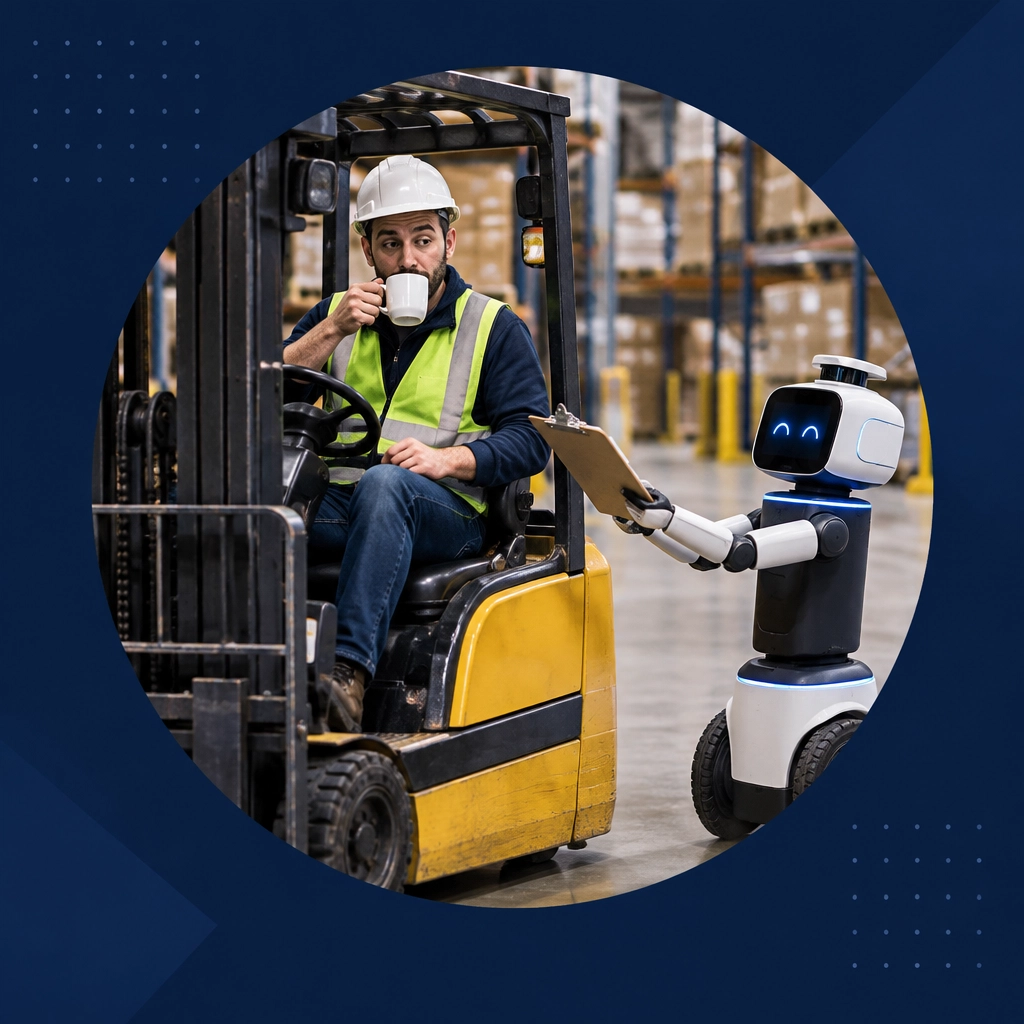
There is an important counterweight to the displacement story: people are still needed, and openings have not disappeared. The Bureau of Labor Statistics’ June 2026 JOLTS release reported a 97,000 increase in openings across transportation, warehousing and utilities. The BLS profile of warehousing and storage workers found that 17% were age 55 or older in 2023, an industry with difficult-to-fill, physically demanding and repetitive jobs.
That helps explain why robots and hiring can rise at the same time. Robots can take on repetitive tasks while people handle exceptions, safety decisions and other judgment-heavy work. In a PYMNTS Intelligence survey of 60 CFOs at billion-dollar companies, 50% expected AI to create new roles, while 47% expected significant headcount reduction elsewhere. Both outcomes can be happening inside one company.
These figures require care. Projections are not layoffs. Autonomous trucking is not yet deployed economy-wide. Job openings are not guarantees of hiring, and estimated regional effects depend on each state’s economic specialization. The point is not that every freight job is about to vanish. It is that employment trends alone may not show where the industry is heading. Freight’s displacement story is less a single wave than a quiet redrawing of the map, and maps can change before workers see the consequences.
Why Franchising Can Be A Different Route
Exploring ownership is not an escape hatch from every form of risk. It is a different arrangement: instead of relying only on a job ladder within freight, you can assess whether your experience could support a local business serving customers directly.
Many logistics skills transfer. Drivers plan routes and schedules, follow safety and compliance procedures, and build reputations for reliability. Dispatchers coordinate people and timing. Warehouse teams understand equipment, inventory flow and operational bottlenecks. Diesel mechanics bring practical maintenance instincts. These capabilities can matter in businesses that need dependable service, sound scheduling and strong customer communication.
Franchise categories worth researching may include moving and relocation services, last-mile delivery and courier operations, auto care and mobile services, home services such as junk removal, handyman work or restoration, and logistics-adjacent staffing. Local, physical, relationship-driven services may give those skills a new place to earn, though every franchise model has its own costs, competition and technology risks.

Match The Opportunity To Your Skills And Financial Reality
Start with your circumstances, not a list of supposedly “best franchises to own.” Write down the capital you can invest, your debt tolerance, income needs, preferred location and how involved you want to be day to day. Decide whether you want to manage employees, perform services yourself or build toward a larger operation.
Ask franchisors what training is provided, whether licenses or certifications are required, and how they evaluate local demand. A franchise for sale can look attractive at a glance, but the right fit depends on your goals, resources and the actual needs of the market you’d serve.
Understand The Costs And Risks Before You Commit
THERE IS NO GUARANTEED INCOME.
Budget beyond the initial franchise fee. Depending on the model, startup and operating costs can include vehicles, equipment, insurance, royalties, marketing contributions, technology fees, employee costs and working capital. Review how long you may need to cover expenses before revenue stabilizes, and consider what happens if sales come in below expectations.
For a logistics-related business, assess technology as carefully as equipment. Ask who pays for required platform updates, new software or equipment replacement. Clarify who owns operating and customer data, how it may be used, and whether you must adopt mandatory upgrades on a schedule or at a cost set by the franchisor. A business model designed around today’s dispatch or delivery systems could face pressure as automation tools change.
Review The FDD And Speak With Franchisees
Before deciding how to buy a franchise, review the Franchise Disclosure Document (FDD) with an independent franchise attorney and a financial professional. Focus on Items 5, 6 and 7 for fees and estimated investment; Item 19 for any financial performance representations; and Item 20 for outlet history and franchisee contacts. Review technology disclosures too, particularly required computer systems, ongoing support, upgrades and franchisor access to business data.
Under the FTC Franchise Rule, a franchisor generally must provide the FDD at least 14 days before you sign a binding agreement or pay the franchisor or an affiliate. Start with the FTC’s Consumer’s Guide to Buying a Franchise and its Franchise Rule Compliance Guide.
Speak with both current and former franchisees. Ask about actual startup costs, training, technology expenses, support, local demand and why some owners left. The SBA Franchise Directory can help you check brands for SBA financing eligibility; inclusion is not an SBA endorsement or a guarantee of success.
Talk With A FranLift Consultant

If freight’s changing map has you considering another way to use your experience, a conversation can help clarify what to investigate. FranLift’s matching process starts with your goals and financial reality, then helps identify franchise opportunities to explore. The service is free to buyers; franchise companies cover the cost as part of their marketing budgets.
Contact FranLift to discuss your background, budget and next steps.
This article is for informational purposes only and is not legal, financial, tax or investment advice. Franchise ownership involves risk; review the specific opportunity with qualified independent professionals.
Launch Beyond Boundaries.
© 2026 FranLift.
