

Launch Beyond Boundaries.
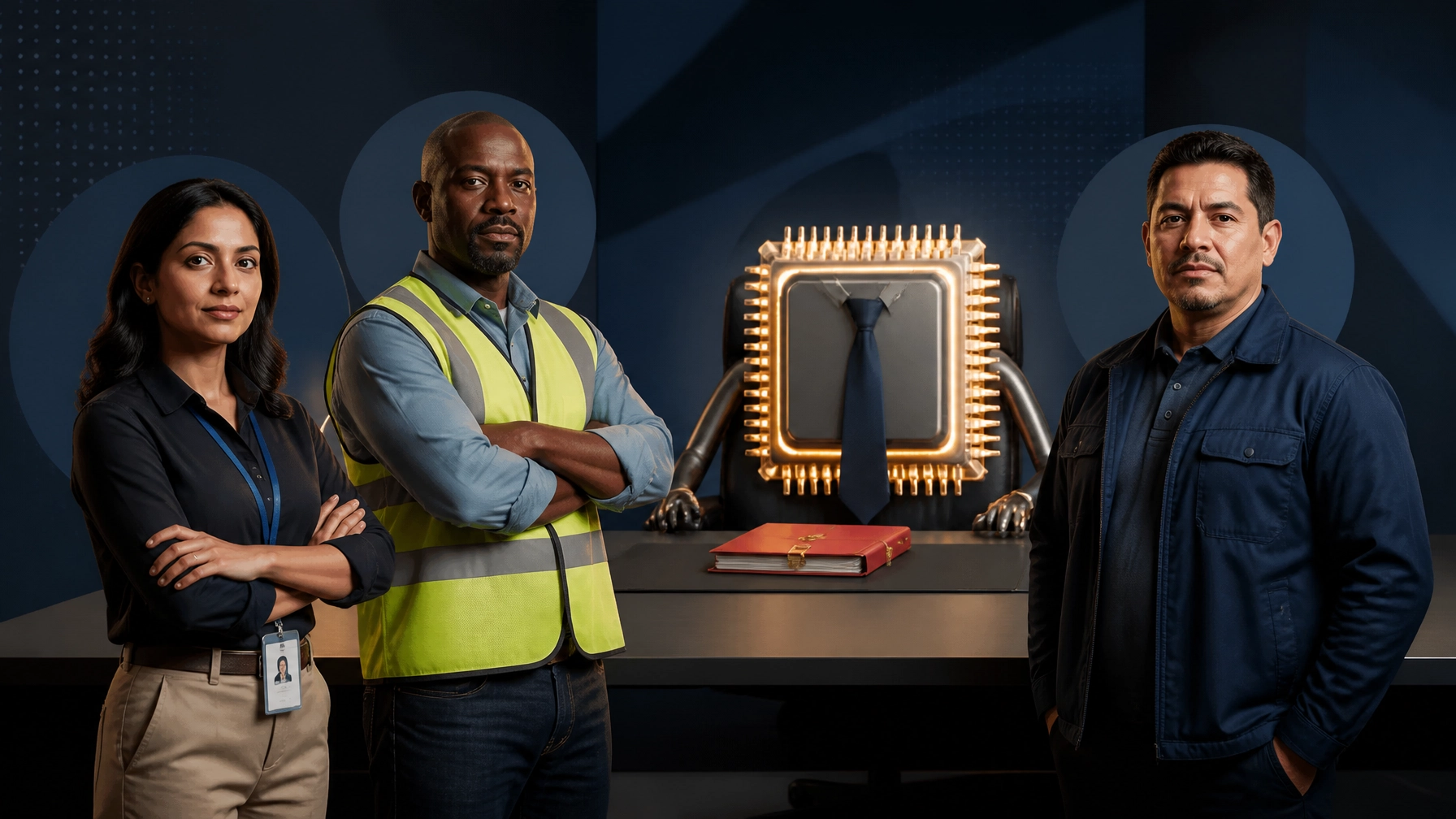
The robot is not coming for your job. It is already sitting in the leadership meeting, optimizing the headcount spreadsheet, and asking why your department still needs eight people when software can handle the “repeatable parts.”
That is the uncomfortable reality for professionals in IT, manufacturing, and trucking.
AI can write routine code, monitor production lines, inspect products, optimize routes, schedule loads, track fleet performance, and summarize the meeting where your position gets “restructured.” The microchip may not technically be your boss, but it is increasingly influencing who gets hired, promoted, reassigned, or replaced.
Waiting for a layoff notice is not a career strategy. It is an administrative event with worse snacks.
For many experienced workers, franchise ownership offers a practical alternative: move from depending on one employer toward operating a business you can influence, grow, and potentially build equity in over time. It is not guaranteed career insurance. No business opportunity eliminates risk. But owning a franchise can give you more control than hoping the next corporate reorganization skips your name.
Artificial Intelligence Is Changing The Value Of Your Work
The issue is not whether AI will eliminate every job in your industry. It will not.
The issue is whether AI will eliminate enough of your current tasks to change the value of your role.
SHRM research on automation and job displacement risk reports that approximately 20% of U.S. employment: about 31.1 million jobs: has at least half of its tasks automated. Computer and mathematical occupations show especially high automation exposure, while production and transportation occupations are also being affected.
Goldman Sachs research has estimated that AI could eventually automate tasks representing approximately 25% of U.S. work hours.
These numbers do not mean that millions of people will receive identical pink slips tomorrow morning. Automation exposure is not the same as confirmed job loss.
But “not eliminated yet” is not the same as secure.
IT Professionals: The First Draft Is Now Machine-Generated
AI tools can generate boilerplate code, write tests, document systems, debug common errors, and build basic prototypes. That does not make experienced IT professionals irrelevant. It does mean the market may need fewer people for routine technical production.
If your value comes from solving complex problems, managing risk, leading teams, or connecting technology to business outcomes, you may be positioned to adapt.
If your work depends mainly on repeatable tasks, the pressure is more direct.
The career question has changed from “Can you do the work?” to “Can you create more value than the tools that now do the first draft?”
A franchise can provide a different way to use your strengths. Systems thinking, process improvement, analytics, customer relationship management, and operational discipline are valuable in almost any business model.

Manufacturing Professionals: Fewer Hands Can Produce More Output
Modern factories increasingly use robotics, machine vision, predictive maintenance, automated inspection, and real-time monitoring. A production line may still require skilled people, but it may not require the same number of people to achieve higher output.
Manufacturing professionals understand throughput, quality control, scheduling, labor efficiency, safety, and process discipline. Those skills transfer directly into franchise operations.
Consider a service business such as Sam The Concrete Man. The work requires local sales, project coordination, customer communication, quality control, and reliable execution. Technology can improve estimating and scheduling, but it cannot fully replace the accountability customers expect when a major project affects their property.
The robot may stamp the paperwork. Someone still has to make sure the driveway does not look like a chocolate bar.
Trucking Professionals: The Route Is Getting Smarter
Trucking and logistics are already being reshaped by route optimization, telematics, digital dispatching, predictive maintenance, load planning, and driver-monitoring systems. Autonomous trucking also continues to develop, although regulation, infrastructure, safety, and operational complexity will influence how quickly it expands.
Drivers and dispatchers possess knowledge that does not appear in a routing algorithm: customer expectations, equipment realities, regional conditions, delivery timing, and the practical consequences of a bad plan.
That experience can support ownership in logistics, delivery, retail, or operational service businesses. It can also translate into a franchise model such as The UPS Store, where customer service, shipping knowledge, local business relationships, and process execution matter.
The goal is not to pretend automation will disappear. The goal is to move from being measured by an algorithm to using systems as an owner.

Franchise Ownership Can Turn Career Exposure Into Ownership Leverage
Employment gives you income in exchange for labor. Franchise ownership gives you the opportunity to operate a business using an established brand, training program, marketing resources, and documented processes.
That distinction matters when technology changes the value of labor.
According to the U.S. Census Bureau’s overview of franchising, franchising extends far beyond restaurants and represents a substantial part of the U.S. business economy.
Today’s franchise opportunities include:
- Senior care and home health services
- Home improvement and maintenance
- Shipping, printing, and business services
- Health and wellness
- Fitness studios
- Education and tutoring
- Automotive services
- Cleaning and property services
- Food and hospitality
- Local logistics
The best franchises to own are not universal. The best fit depends on your capital, market, preferred owner role, skills, and tolerance for operational responsibility.
For example:
- Visiting Angels may appeal to someone drawn to a human-centered senior care business. Review the brand’s official franchise information and conduct independent due diligence.
- Sam The Concrete Man may fit an operations-minded owner who understands project execution and local service demand.
- Club Pilates may suit an owner interested in wellness, community building, and recurring customer relationships.
- The UPS Store may appeal to professionals with logistics, retail, customer service, or small-business experience.
These are examples, not recommendations. A recognizable name does not replace market research, financial analysis, or legal review.
How To Buy A Franchise Without Making An Expensive Guess
Searching for a “franchise for sale” is easy. Choosing a business that fits your life is considerably harder.
Before reviewing brands, answer five questions.
Define Your Financial Position
Identify your liquid capital, cash reserves, financing capacity, personal obligations, and working-capital needs. The initial franchise fee is only one part of the investment. You may also need funds for equipment, leasehold improvements, payroll, insurance, marketing, vehicles, technology, and the period before revenue becomes consistent.
Do not invest retirement funds or emergency savings without understanding the downside.
Decide How You Want To Work
Some franchises require hands-on owner involvement. Others may support a manager-led or semi-absentee structure, although “semi-absentee” does not mean “semi-responsible.”
Decide whether you want to manage employees, sell services, work from a storefront, operate a mobile business, or build a team that handles daily operations.
A franchise that looks attractive on paper can be a terrible fit if its daily work conflicts with your lifestyle.
Match Your Transferable Skills
IT professionals may bring systems thinking and process discipline. Manufacturing professionals may understand workflow, staffing, and quality control. Trucking professionals may understand logistics, scheduling, equipment, and customer reliability.
You do not necessarily need prior experience in the franchise’s industry. FranLift notes that many franchisees enter industries where they have no previous experience because franchisors provide training and operating support.
Your objective is to convert existing strengths into ownership leverage: not to recreate your old job with a different logo.
Evaluate Local Demand
Study territory availability, customer demographics, competition, labor supply, seasonality, pricing, and customer acquisition costs.
Ask whether the service solves a recurring local problem. A business may be popular nationally while facing weak demand in your market. Conversely, an ordinary-looking service business may perform well because customers need it repeatedly and reliably.
Review The Franchise Disclosure Document
Before signing or paying, review the Franchise Disclosure Document with qualified legal and financial professionals. Speak with current and former franchisees. Understand royalties, advertising fees, renewal terms, territory protections, required suppliers, performance claims, and exit conditions.
A franchise consultant can help you compare brands and organize the process, but professional advisers should help you evaluate the legal and financial details.

Use A Franchise Consultant Before The Market Uses You
There are thousands of franchise opportunities. Reviewing them all alone is not research. It is digital window-shopping with a spreadsheet.
FranLift helps prospective owners narrow the field based on goals, budget, lifestyle, location, and preferred ownership model. Its franchise matchmaking process covers more than 4,000 franchise concepts across industries such as service, wellness, home improvement, retail, automotive, education, hospitality, food, and pets.
FranLift’s service is free to prospective franchise owners because participating franchise companies cover the cost through franchise development budgets. You should still perform independent due diligence and seek advice from attorneys, accountants, and funding professionals.

Deora Pollock, Chief Franchise Matchmaker
If you are ready to evaluate your options, contact FranLift to discuss your goals and next steps.
Put Yourself In The Driver’s Seat Before The Notice Arrives
AI will continue changing IT, manufacturing, trucking, and nearly every other industry.
You can wait for your employer to decide how much of your role remains valuable. Or you can begin evaluating businesses where your judgment, leadership, customer relationships, and operating discipline matter.
Franchise ownership is not a magic escape hatch. It requires capital, research, execution, and accountability. It can, however, provide a structured path toward independence and a chance to build something beyond a job description.
Do not search for the best franchise to own in the abstract.
Find the best franchise for your skills, financial position, market, and life.
The microchip may be writing the future of work. It does not have to write your entire future.
© 2026 FranLift. Launch Beyond Boundaries.
