


Launch Beyond Boundaries. Build Something No Algorithm Can Clock Out.
The next threat to your career may not arrive as a bad performance review.
It may arrive as a software update.
For IT professionals, generative AI can produce code, test applications, document systems, and troubleshoot problems in seconds. On factory floors, robots now assemble, inspect, package, and move products with tireless precision. In trucking, autonomous systems are moving from controlled pilots toward commercial highway routes.
The question is no longer whether automation is coming. The question is whether your income depends entirely on an employer deciding that your role still exists.
For many workers, the answer is becoming franchise ownership: a way to move from selling labor to building an asset, supported by a proven operating model and real human demand.
The Hard Truth: Automation Is Already Reshaping The Labor Market
According to Challenger, Gray & Christmas reporting summarized in July 2026, U.S. employers had announced 112,713 job cuts explicitly attributed to artificial intelligence through July 2026. In July alone, employers cited AI in 10,970 announced cuts, representing approximately one-third of that month’s total.
The technology sector led the broader layoff count, with 149,023 announced cuts year to date. That does not mean every technology worker is replaceable. It does mean employers now have a credible alternative to adding headcount: buy software, deploy automation, and ask fewer people to produce more.
Some industry analyses put the concentration of AI-related cuts at approximately 4,157 per 100,000 technology employees. Transportation and warehousing have been estimated at roughly 880.5 per 100,000 employees. These per-100,000 figures are derived rates rather than standard figures published directly in Challenger’s public summary, so they should be treated as analytical estimates. The direction is still clear: automation pressure is not limited to the software industry.
IT And Coding: The Entry-Level Ladder Is Shorter
The first rung of the software career ladder is taking the most pressure.
Stanford’s Digital Economy Lab found that employment among workers aged 22–25 in highly AI-exposed occupations has declined relative to less-exposed occupations, primarily because companies are hiring fewer early-career workers. Stanford researchers report that the relative decline is approximately 13% to 16% in the most exposed roles.
Software developers aged 22–25 have experienced an employment decline of nearly 20% from the late-2022 peak in widely cited analyses of the same trend. The message for new graduates and junior developers is blunt: competence is no longer enough if the employer believes a model can handle the repetitive portion of the job.
A coding assistant does not need a promotion, health insurance, vacation time, or a larger desk. It can work through the night and never ask whether the company has a career path.

Manufacturing: The Robot Does Not Need A Shift Change
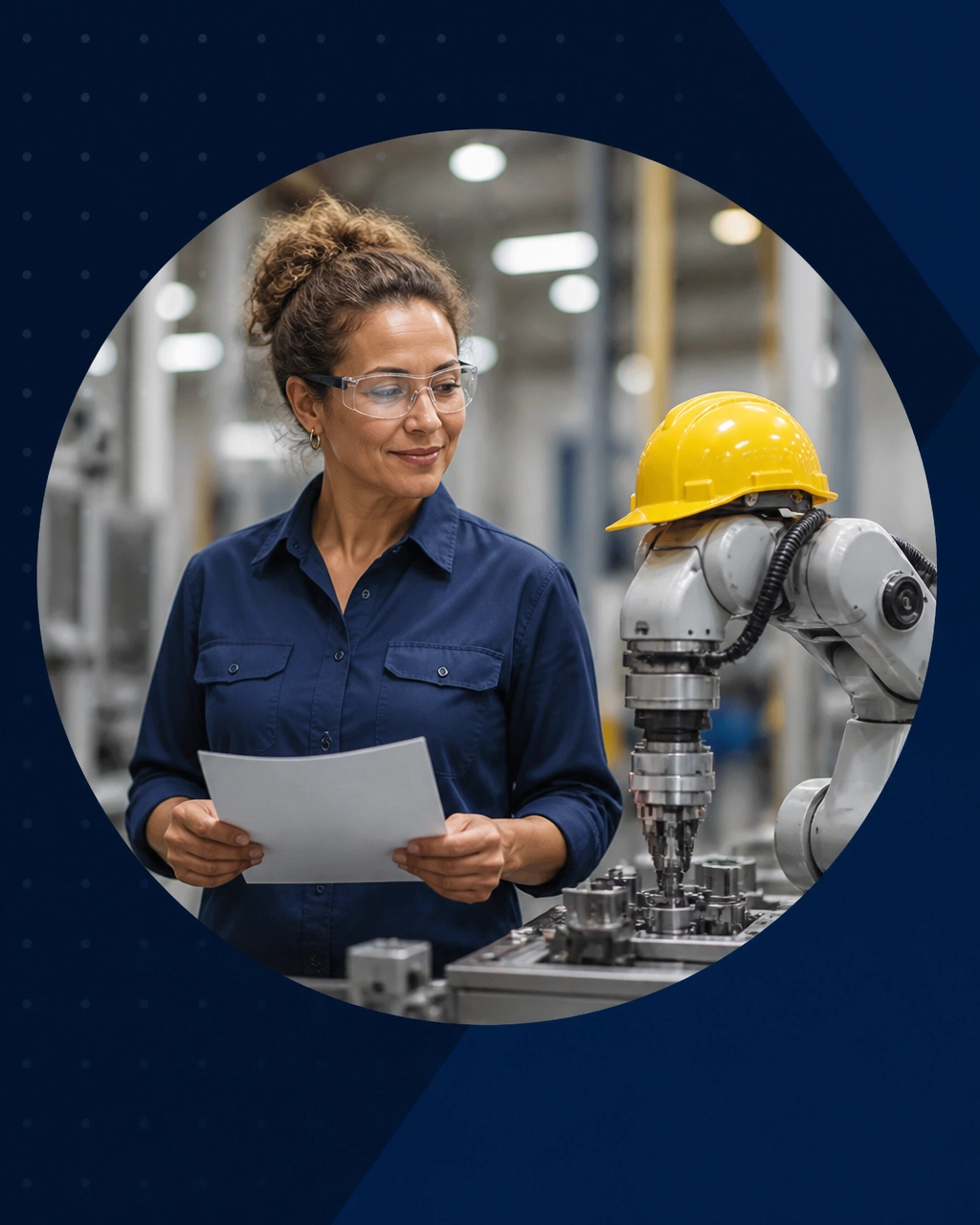
Manufacturing automation is moving beyond isolated experiments. Robots and automated guided vehicles are increasingly handling assembly, inspection, material movement, and warehouse tasks.
PwC’s 2026 industrial manufacturing outlook reports that the share of manufacturers expecting to highly automate key processes by 2030 is projected to more than double, from 18% to 50%.
That does not mean every factory worker disappears. It means the repetitive parts of the job become easier to automate: and the remaining roles often demand more technical training, fewer workers, or both. In advanced automotive plants, estimates suggest that assembly-line, body-shop, paint-shop, and shop-floor logistics positions could face significant reductions by 2030.
The factory may still need people. It may simply need fewer people standing beside the machine.
Trucking: The Highway May Need Fewer Human Hours
Trucking presents a more complicated picture. The United States still faces a major driver shortage, and many routes, terminals, urban environments, and customer interactions require human judgment.
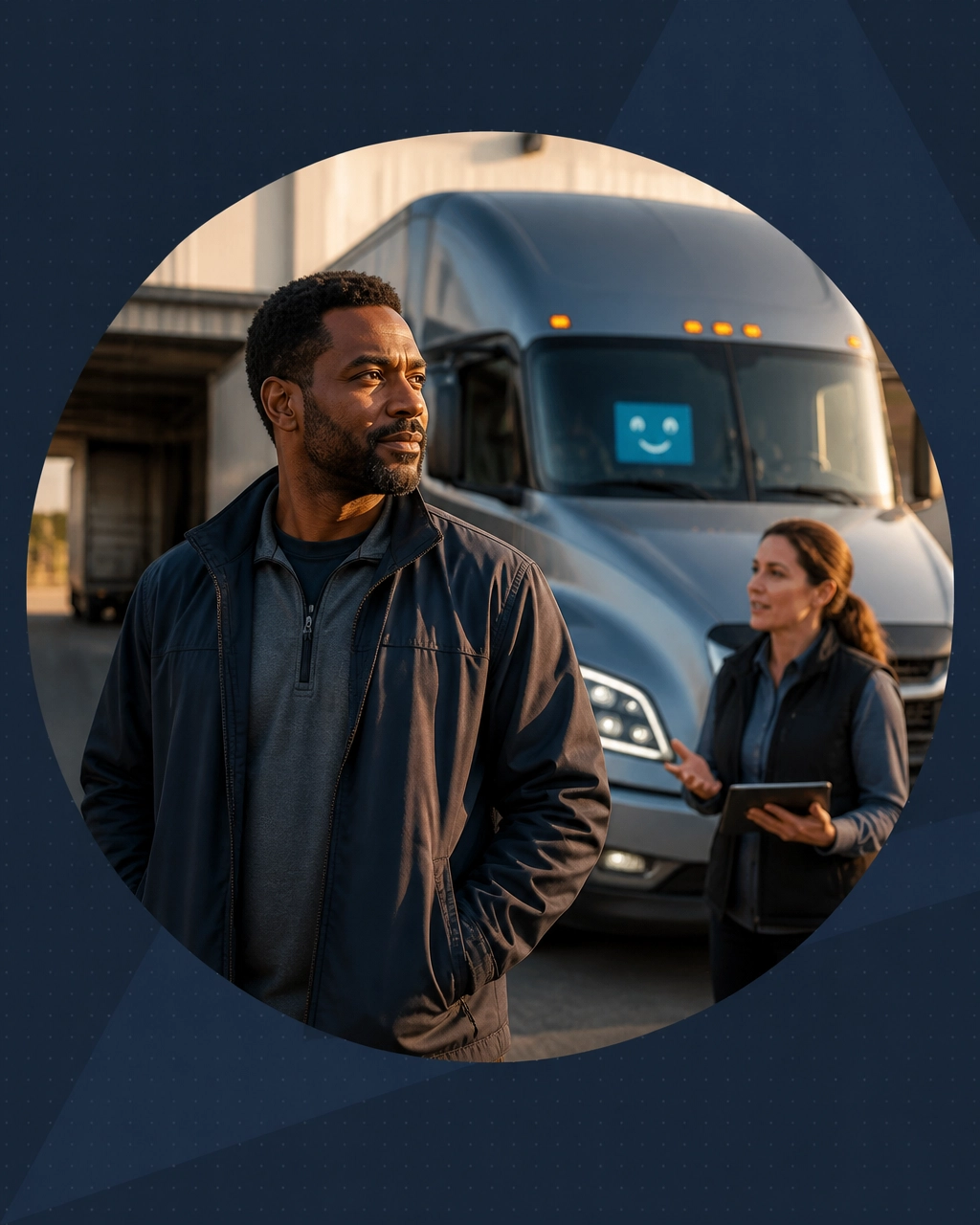
But long-haul highway driving is a natural target for autonomous systems. McKinsey’s research on autonomous freight transportation describes a gradual transition in which autonomous trucks may first operate on predictable corridors, supported by transfer hubs, remote supervision, and human drivers handling complex first- and last-mile work.
By 2030, the likely outcome is not that every truck driver is unemployed. It is that the number of human driving hours, overtime opportunities, and long-haul roles may be under pressure. Automation may fill a labor shortage while also limiting the future growth of the profession.
That distinction matters. A job does not have to vanish overnight to become a weaker foundation for your financial future.
The Pivot: Why Franchising Beats Corporate Employment
Franchising is not a magic shield against economic change. It is a different relationship with work.
As an employee, you control your effort but not the business decision that determines whether your position remains funded. As a franchise owner, you accept responsibility for performance while gaining control over the enterprise, the customer relationships, and the long-term value you are building.
Income Control Starts With Ownership
A paycheck is compensation for time and output. Ownership gives you the opportunity to build revenue through customers, systems, employees, and repeat business.
That does not guarantee income. Every franchise requires capital, disciplined execution, and careful due diligence. But a well-matched franchise can provide a clearer path to growing an operation than waiting for annual raises inside a shrinking department.
Many franchise businesses are built around services people continue to need in person: home improvement, senior care, education, wellness, automotive services, commercial maintenance, logistics support, and professional services.
AI can optimize a schedule. It cannot personally reassure a parent, inspect a home, calm a customer, lead a local team, or earn trust in a neighborhood.
There Is No Corporate Age Ceiling
Corporate employment often rewards a narrow combination of current skills, title progression, and perceived runway. Franchising evaluates a different question:
Can you follow a system, lead people, serve customers, manage resources, and improve execution?
That makes franchise ownership relevant to a laid-off coder, an experienced plant supervisor, a veteran driver, or a mid-career operations professional. You do not need prior experience in every industry. FranLift notes that many franchisees become owners in industries where they have no prior experience, because the model provides training, operating procedures, and ongoing support.
Your professional background still matters. IT workers bring systems thinking. Manufacturing workers understand process control and quality. Trucking professionals know logistics, safety, dispatch, and customer deadlines. The goal is to transfer those strengths into a business where they create equity rather than simply increasing an employer’s output.
The Human Connection Economy Is Harder To Automate
The most durable businesses are not always the most technologically advanced. They are often the businesses customers trust because the service is local, personal, and accountable.
A franchise can combine technology with human delivery. Scheduling software may improve efficiency. Automated marketing may generate leads. But customers still want a person who answers the phone, shows up on time, solves the problem, and takes responsibility for the outcome.
That is the opportunity hiding behind the automation threat: use technology as an operating advantage instead of competing with it for a seat at the keyboard.
Proven Models Reduce The Guesswork
Starting independently requires creating a brand, pricing services, documenting processes, sourcing vendors, building marketing systems, and learning from expensive mistakes.
A franchise offers an established framework. The franchisor may provide training, marketing resources, operational guidance, technology, vendor relationships, and a recognizable brand. It is still your business to run, but you are not required to invent every business function from scratch.
That is why the search for the best franchises to own should begin with fit, not hype. The best opportunity for one buyer may be a service franchise with flexible staffing. For another, it may be an education, automotive, home improvement, or wellness concept. The right choice depends on capital, geography, lifestyle, management preferences, and goals.
How To Buy A Franchise Without Replacing One Risk With Another
Buying a franchise is a serious financial decision. Do not choose a brand because an advertisement promises easy money or because automation has made you angry.
Start by defining your requirements:
- How much liquid capital can you invest without compromising your household?
- Do you want an owner-operator role or a manager-led business?
- How many hours are you prepared to work during launch?
- Which industries match your strengths and interests?
- What level of territory protection, training, and franchisor support do you require?
- What do the Franchise Disclosure Document, financial assumptions, fees, and obligations actually say?
A qualified franchise consultant can help you compare brands, identify mismatches, coordinate introductions, and connect you with franchise attorneys and funding partners. The consultant does not replace legal, tax, or financial advice. Those professionals should review the details before you sign.
Meet The Person Behind The Match
FranLift approaches franchise discovery as matchmaking: not a random directory of brands.

Deora Pollock, Chief Franchise Matchmaker, helps prospective owners narrow thousands of possibilities into a practical shortlist aligned with their goals, values, experience, and budget. FranLift’s process includes an initial consultation, market research, curated brand matching, introductions, and support connecting buyers with attorneys and funding resources.
The service is free for the buyer because participating franchise companies cover the cost through their franchise development budgets.
Your Next Move Should Be Deliberate
You do not need to panic-buy a franchise because a robot can write code, assemble a component, or navigate a highway.
You do need to recognize the difference between employment security and ownership security. One depends on an organization continuing to value your role. The other gives you the chance to build an organization that creates value for customers and employees.
Explore why FranLift, review available franchise opportunities, and learn how to buy a franchise with professional guidance.
Then contact FranLift to discuss your goals. The consultation is free, the decision remains yours, and the first step is simply identifying what you want your next chapter to look like.
Your replacement may never sleep.
Your future should not depend on whether it gets tired.
Franchise ownership involves financial risk and is not a guarantee of income or success. Review all franchise documents carefully and consult qualified legal, tax, and financial professionals before investing.
© 2026 FranLift. Launch Beyond Boundaries.
